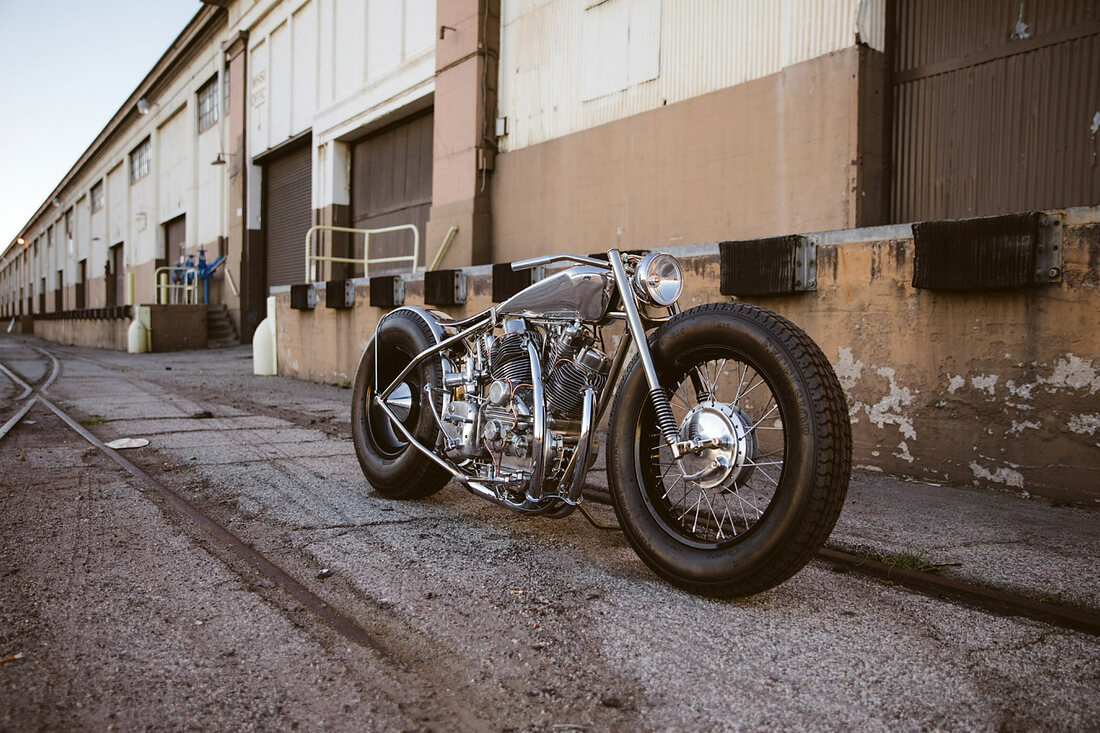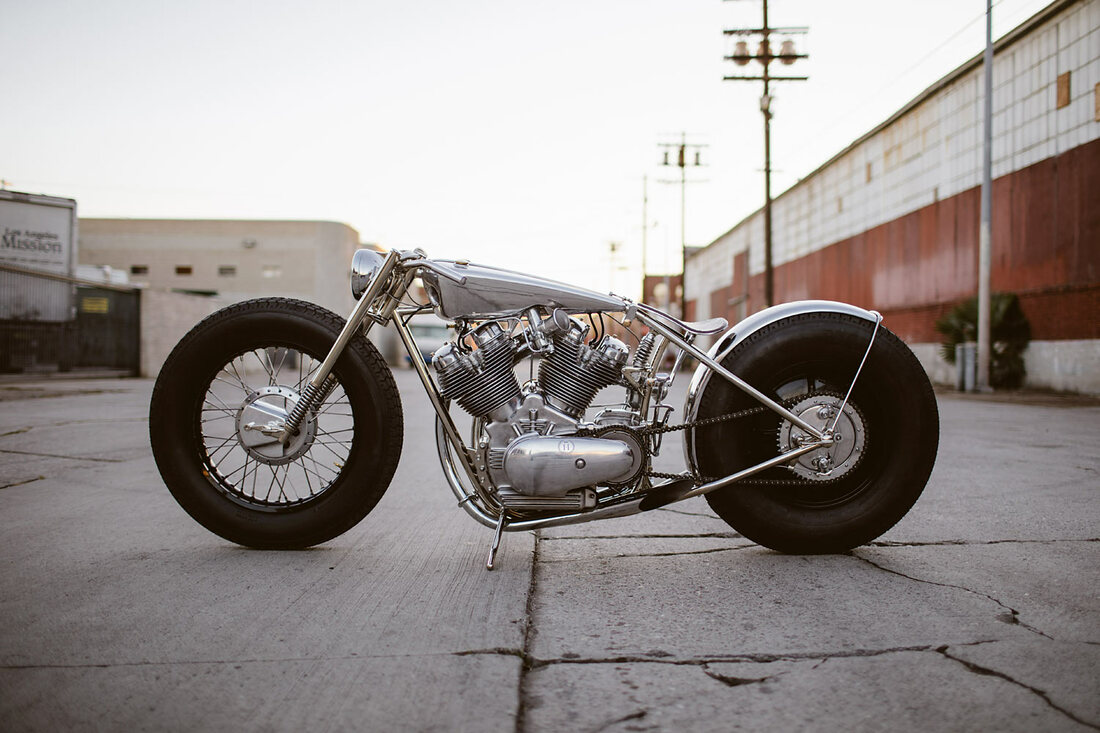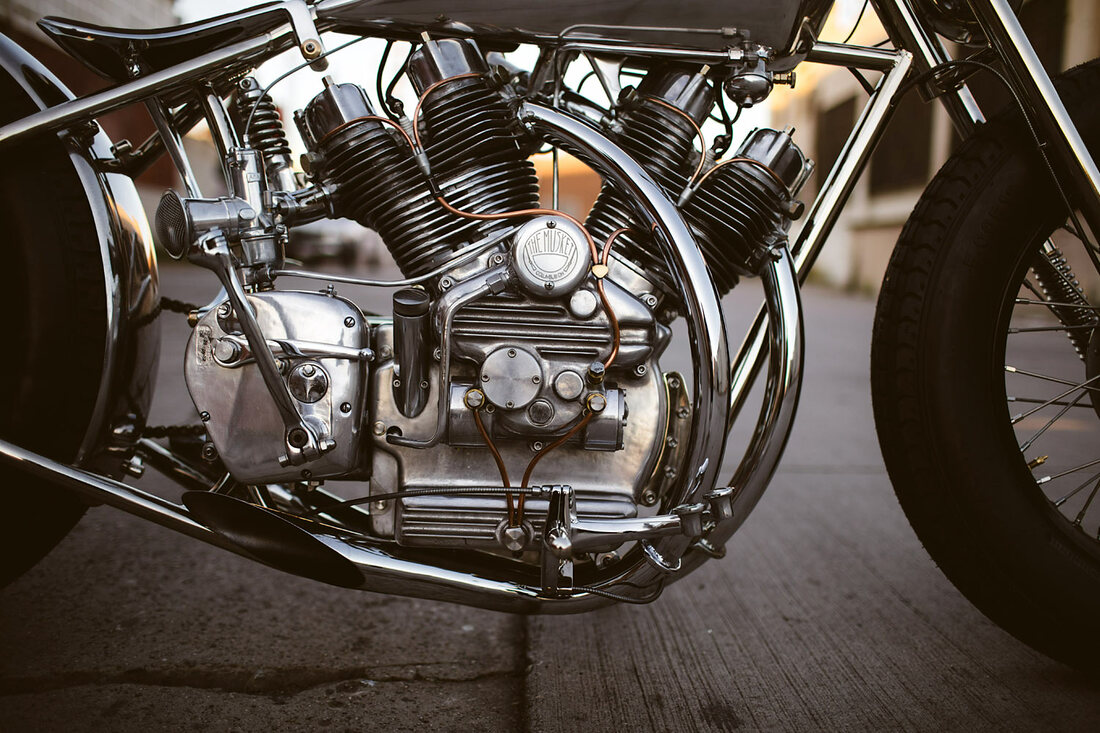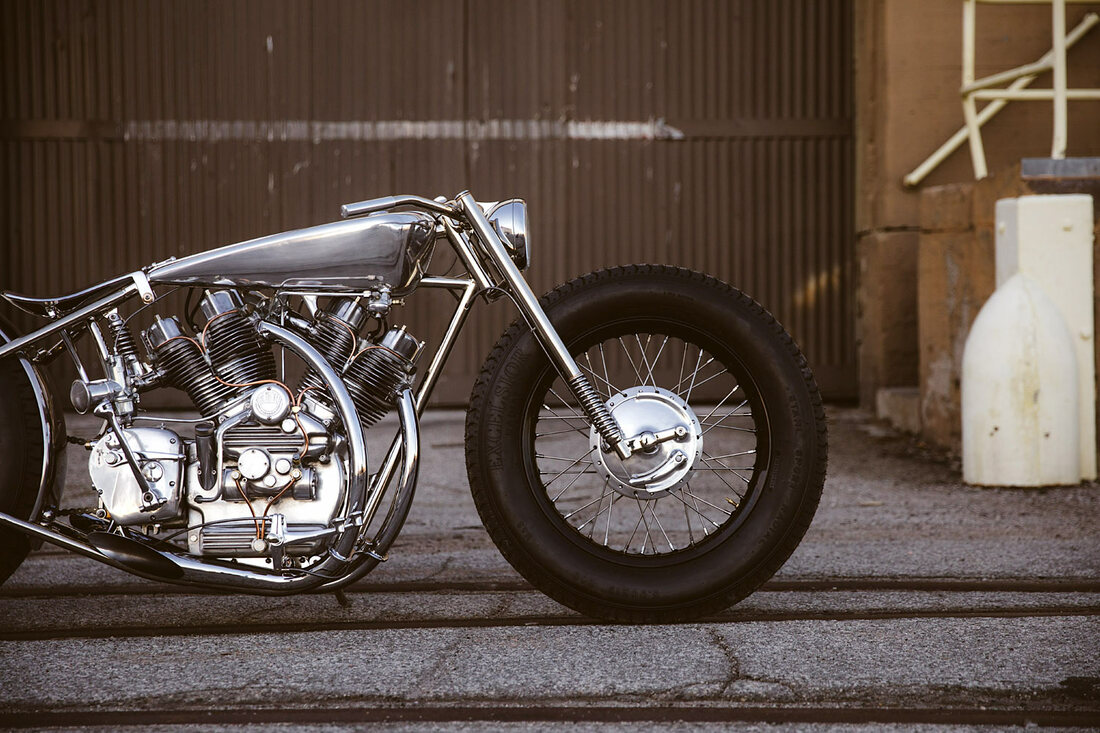
What a great life lesson from such a simple little device. How wonderful it would be if my head could just disconnect at will from the constant churning and just coast for a while...perhaps get some sleep. But no.
The Bullet is a Wise Woman.
 
 
Picture
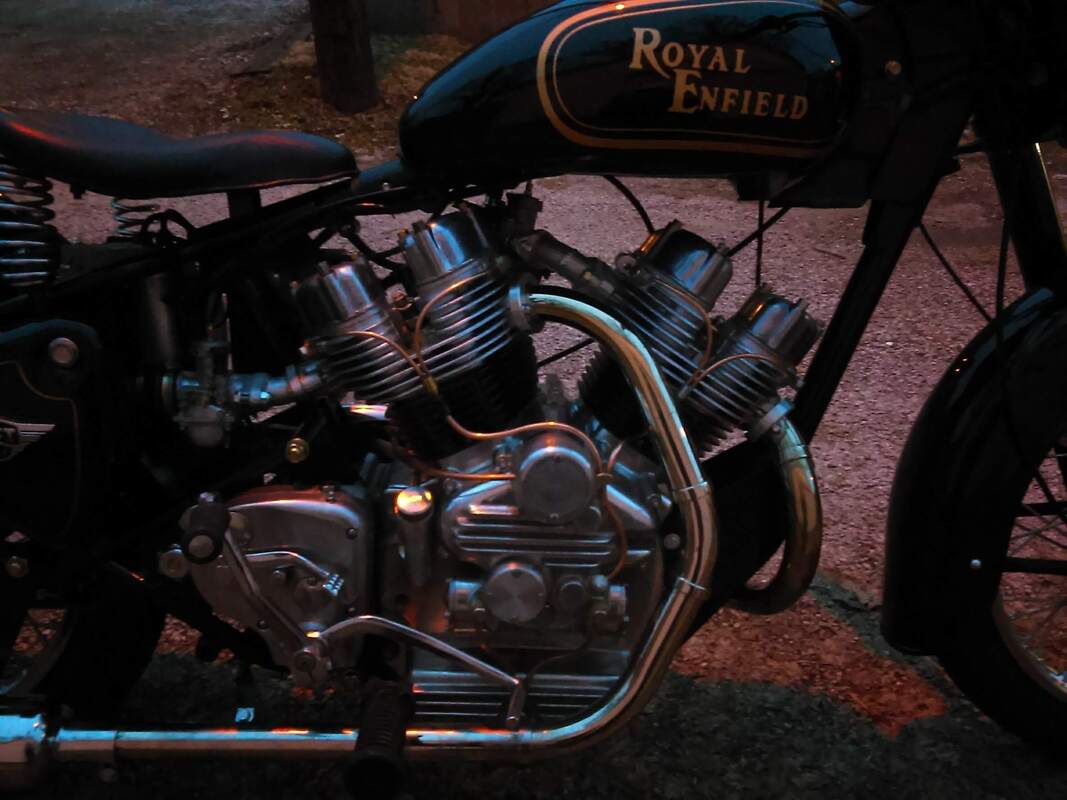
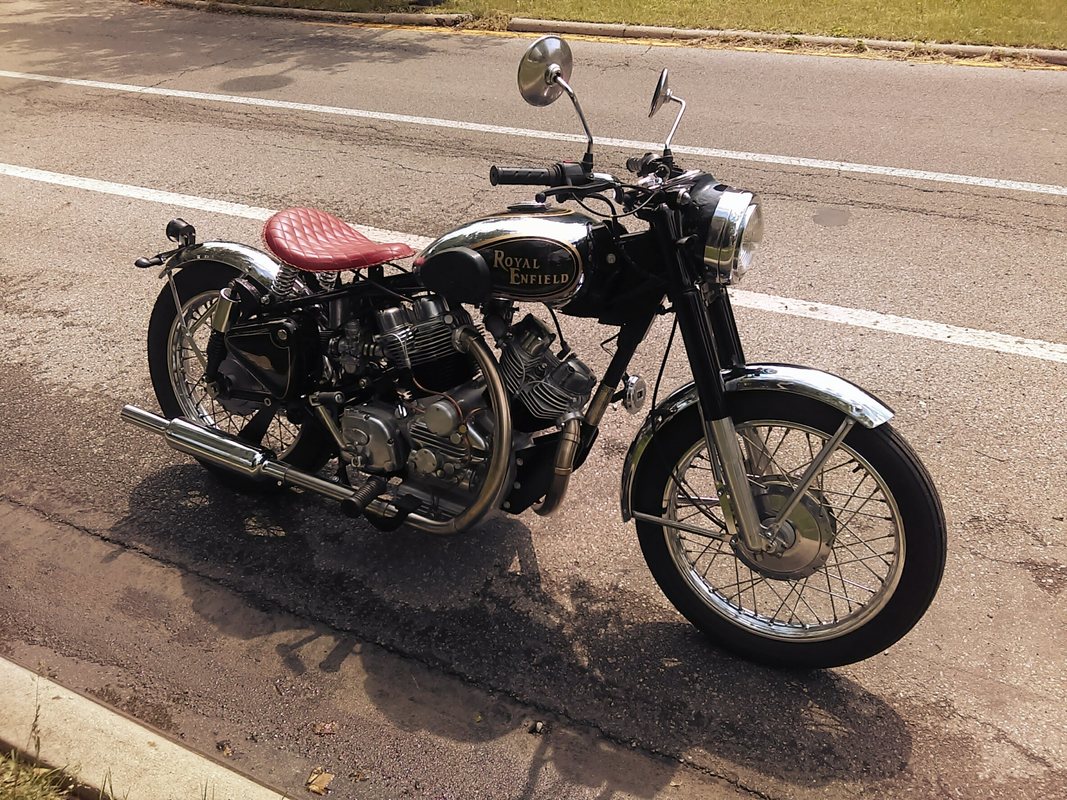
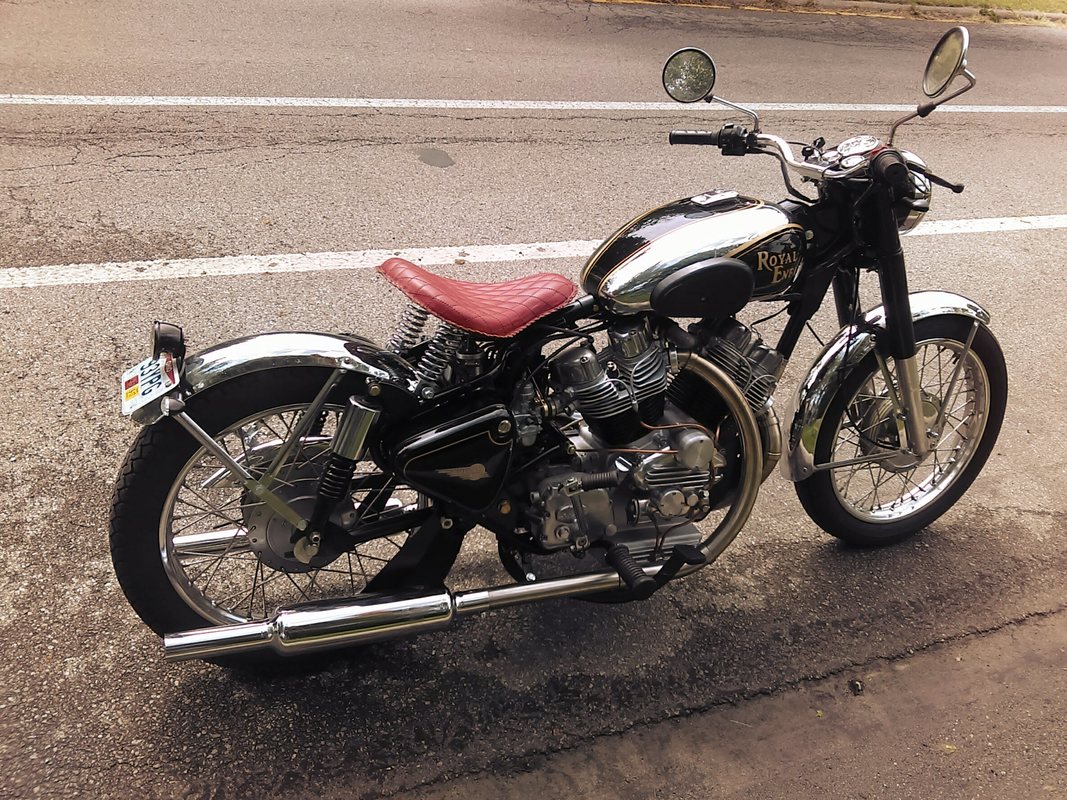
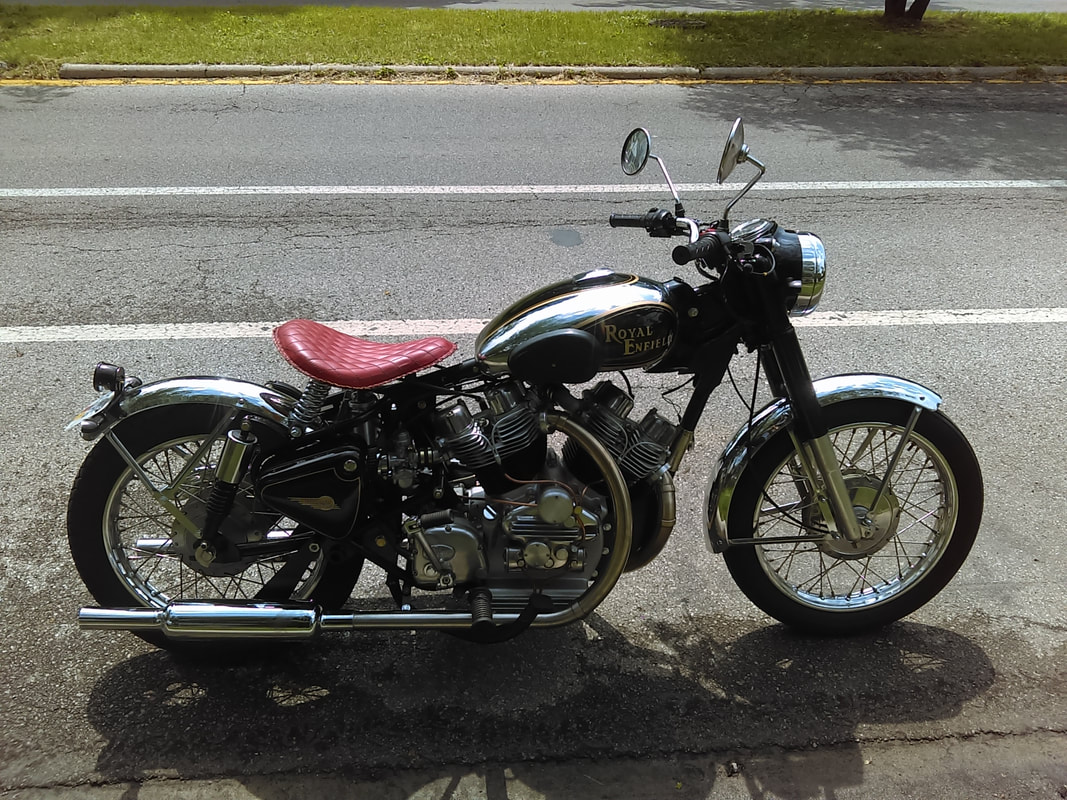
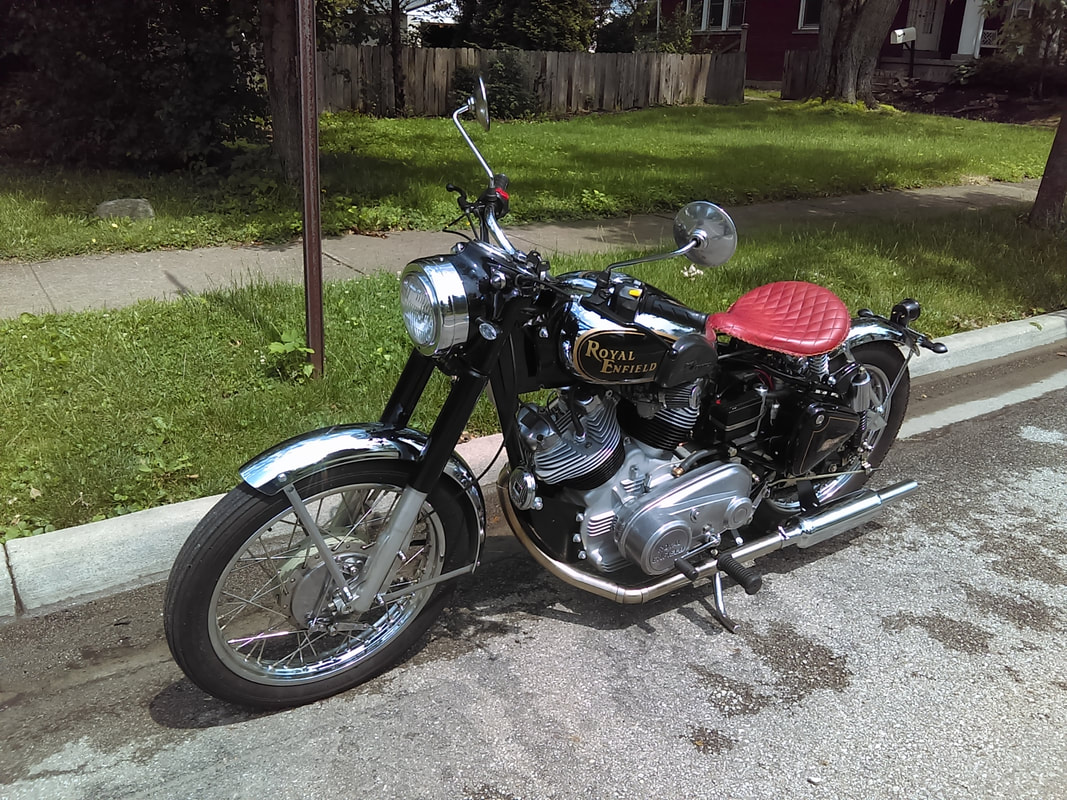
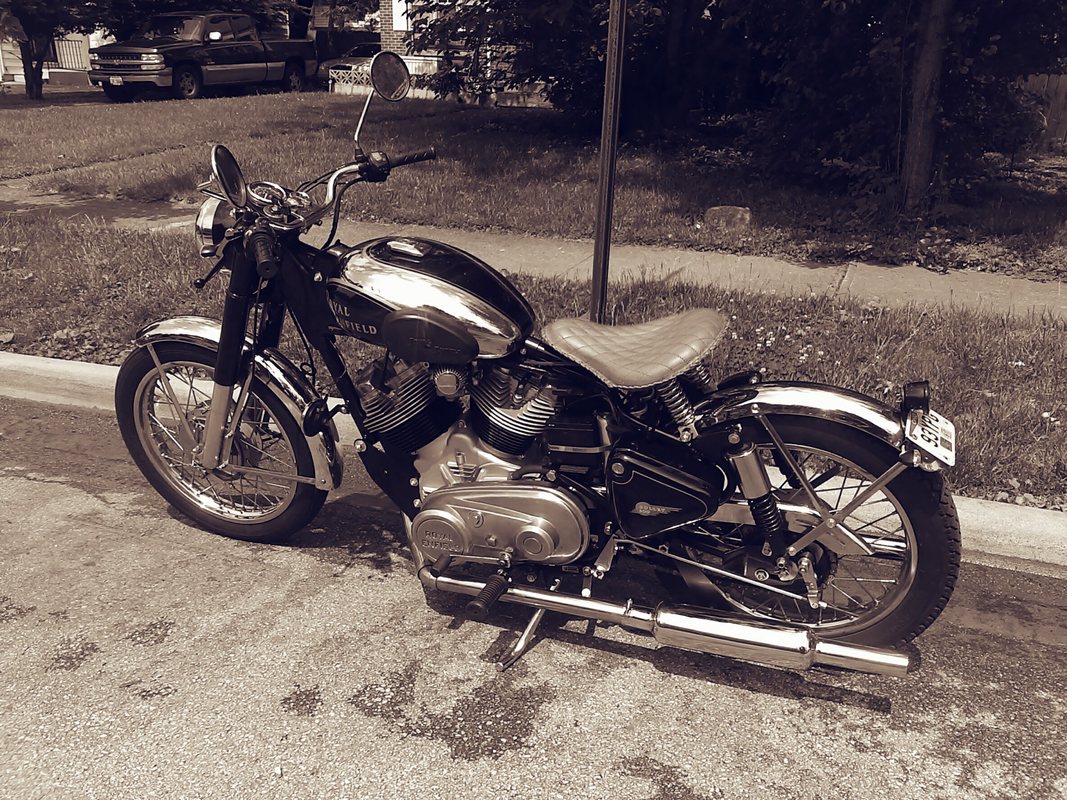
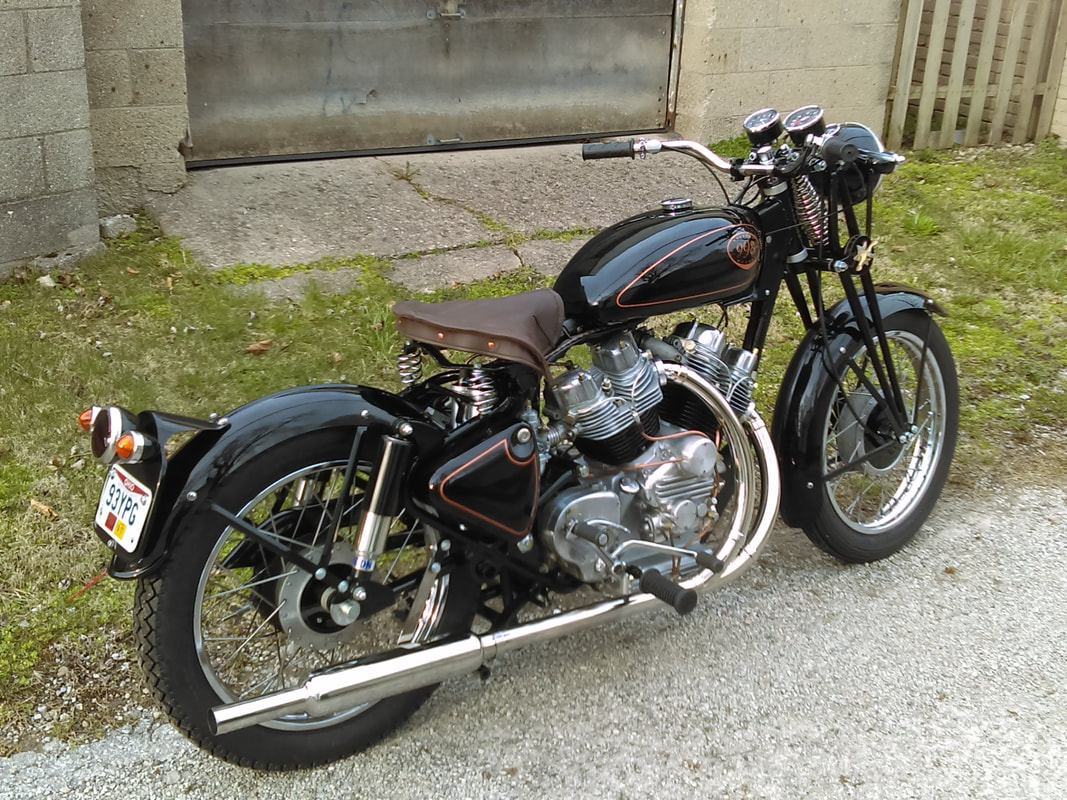
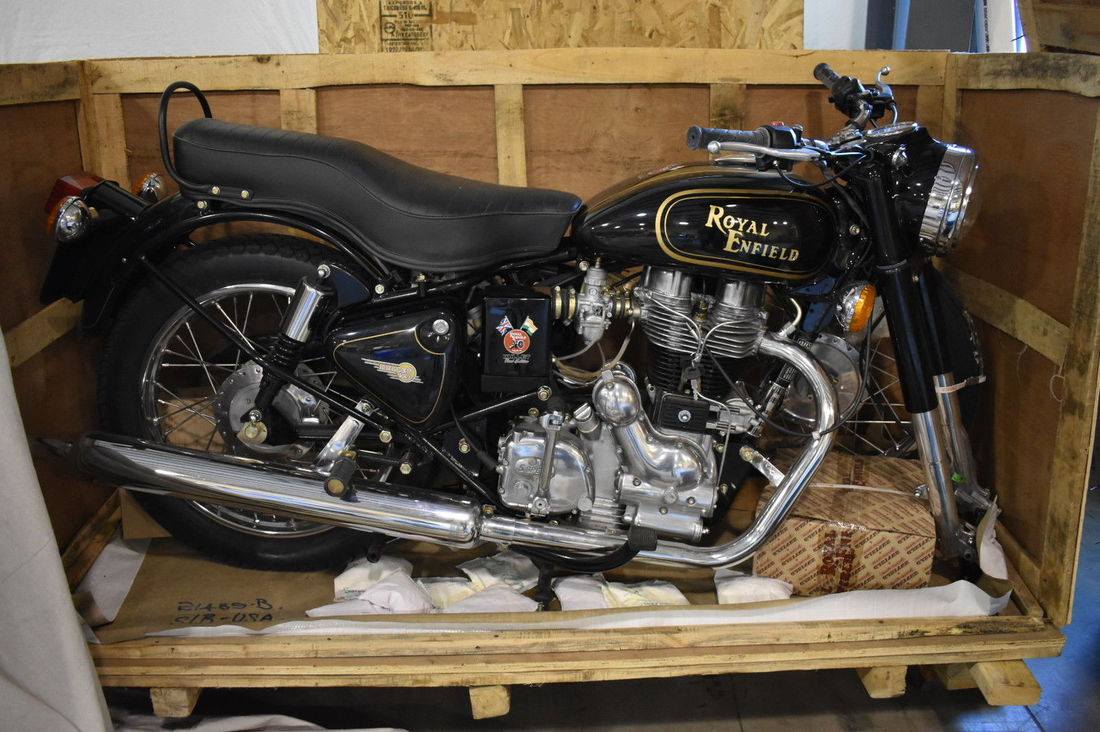
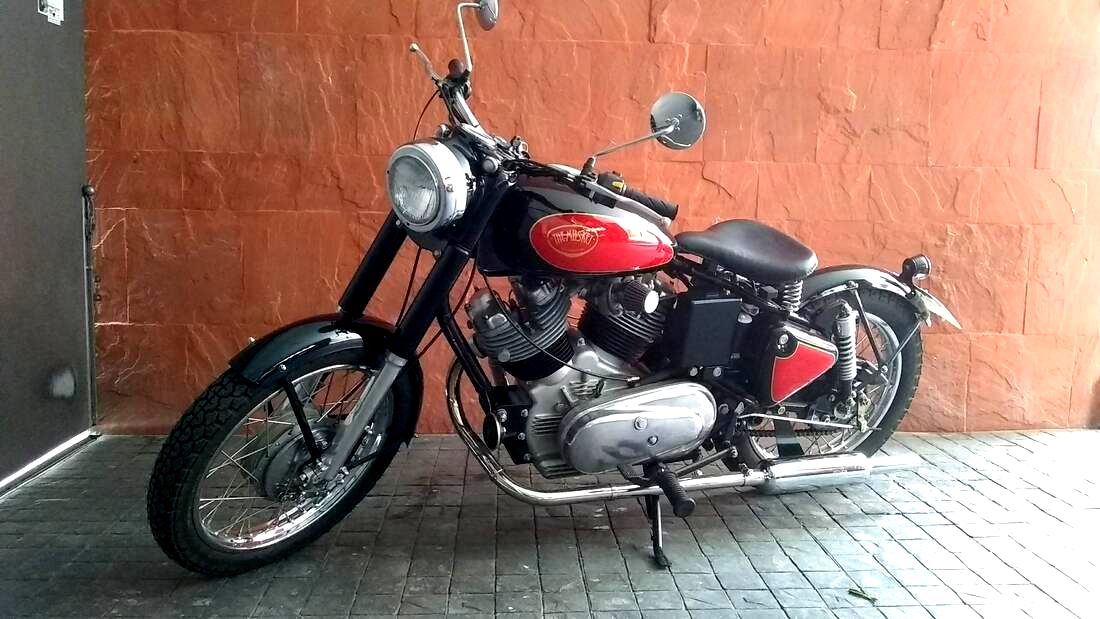
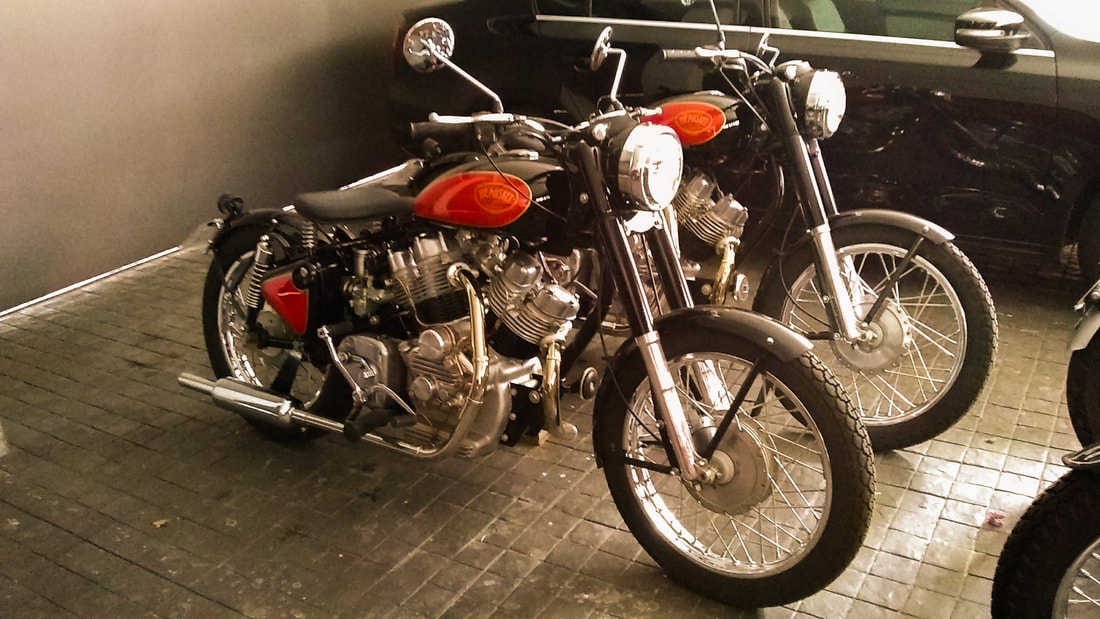
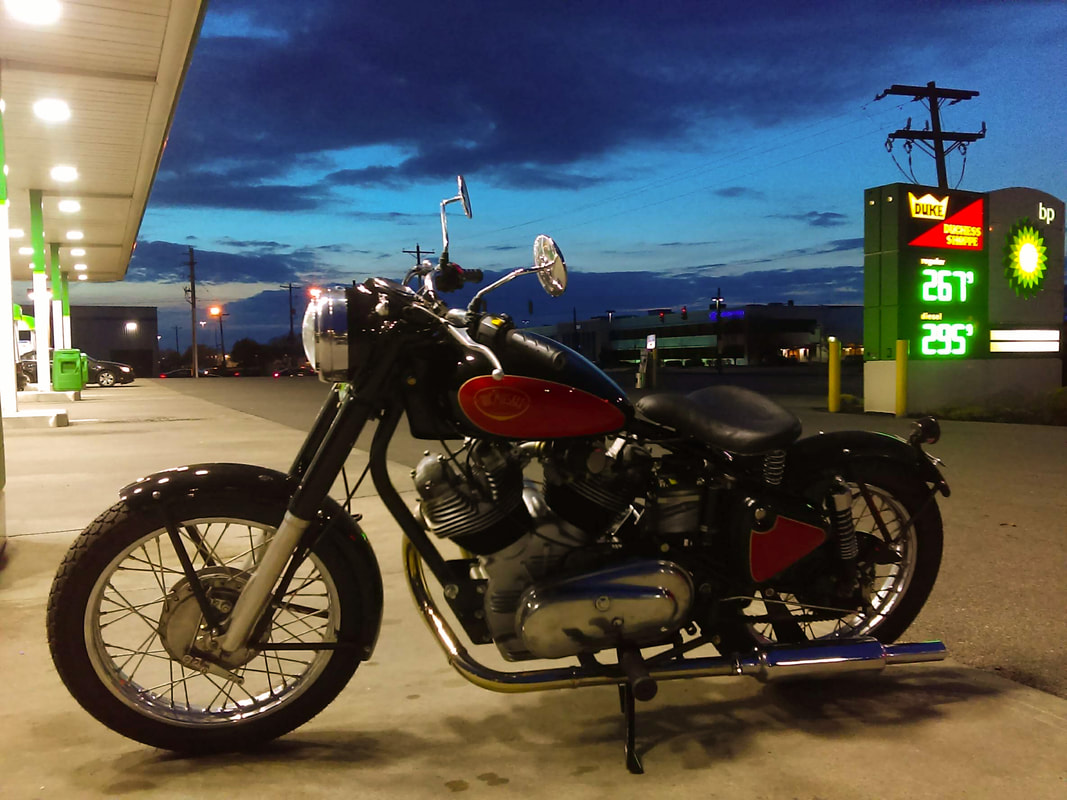
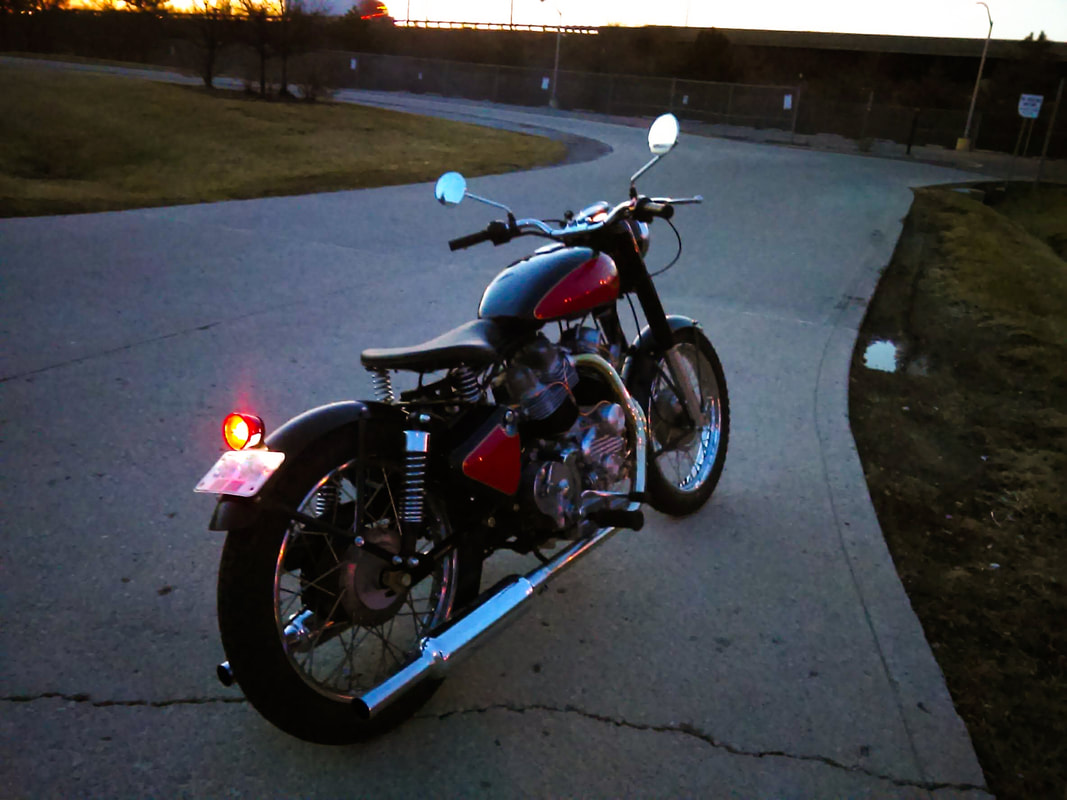
Gentlemen, please welcome a ratty but still extremely lovable addition to my stable.
My first 500! Yes sir, inspite of years of Enfieldly Ecstasy, I never had one. 500s were few and far between in Delhi back then.
Saw this months ago on David Blasco's excellent blog. The seller had a rather humorous and frank description of it's ugliness, need of frequent tinkering, unpredictable  gearbox and unconventional method of exhaust pipe fitment- via a spring welded to the pipe, hooked to a bolt in a  hole drilled into the cylinder head fins. Ouch. It came up for sale right here in Columbus, a couple of weeks after I drove to Jersey to pick up the wrecked 500. Sigh... life's like that. I went and took a look, found the price to be a rather high for the shape it was in and decided to sadly walk away. It also had almost no compression.
Recently, I began to get second thoughts about registration issues and complications due to  the salvage title of the wrecked 500 and remembered the ratty one in town. Discovered it was still unsold, made offer, was accepted. Thanks Nick! Your ex-bike is going to become really cool soon.
Went to pick it up, it was started up and ran, the deal was done. I'd brought wrenches to set the tappets so I pop the cover off and sure enough, the exhaust tappet is waaay too tight! As in the valve couldn't be closing at all! I began to fret, wondering about burnt valves. I adjusted the pushrod till it spun free, kicked it over and...still no compression at all!
Well, that was all I could do. Surprisingly, it would start and run but didn't like to idle, so I kept the revs up just enough and got on my way home. It didn't feel like it had much go, not surprising. This was also the first time I tried the USA left side shift on the old style gearbox.
In short, gears were swapped with the greatest reluctance, much missing and frustration. All you guys with the left side shift, I admire your patience! I DO have a couple of ideas on a right side conversion which I intend to try out.
The front brake grabbed furiously and almost made me skid. This made me extremely partial to the rear brake which, being on the right, made it rather fraught to use the neutral finder, which was unfortunate, because  the bugger refused to shift!
Miraculously, I made it home, feeling a certain lack of love.
But, all it took was a day and all that old Enfield Effection rushed back in gushing globs.
Took the head off. Ummmm, TRIED to take the head off.
All studs and nuts off, much urgent tapping with a mallet under the intake and exhaust areas (not near the fins!), but it wouldn't budge. In the end, what worked was a 7 ft long two-by-four wedged under the back of the head (intake port), fulcrum was the top of the timing cover and I jumped up and down with it and it finally came loose, after ANOTHER member was used in the front in a similar fashion!
WHEW. WHY??
I found out soon enough and it was all down to a minor detail in the long cylinder nuts.
The BOTTOM edge of the long nuts had been chamfered on the circumference, which gave them a rather narrow contact area and a sort of 'conical' form at the bottom. Tiny, mind you, but conical, tapered. Very good at burrowing INTO the washers, which due to over enthusiastic tightening, expanded and spread out! And became very tightly locked onto the studs because the hole in the washers was now mashed SMALLER than the threaded portion of the studs!
We must remember that it really isn't necessary to bend our wrenches trying to tighten those suckers! Just remember to lightly face your head's mating surface by carefully moving it back and forth on a piece of sandpaper taped down to a piece of glass (150-220 grit will do). The glass will ensure perfect flatness. 
I saw the bore was absolutely clean, no signs of seizure. I suspected the valves and did the old quick trick- pour some solvent into the ports and see if it trickles past the valves. And behold! The exhaust valve let it all flow through without even a feeble attempt at holding it in! The bike was running with an exhaust valve that had NO SEAL!
I took the head to the shop and had the valves out in a jiffy and saw the valve rim was COVERED with dings and pits and was very uneven! Being allowed to run for thousands of miles probably without a tappet adjustment had taken its toll! Fortunately, there was no bluing or discoloration.
So extreme was my emotion at this discovery that I must recall the Dead Parrot Sketch.
This was an ex-exhaust valve!
It had ceased to seal!
It was an extinct exhaust valve!
It had kicked the tappet!

Actually, not so much, about half an hour later... I popped it on the lathe, skimmed about 10 thou. off the mating surface which cleaned it up, skimmed another few thou. off the circumference to thicken the edge back to spec. You can reface a valve as long as you don't get close to a knife-edge around the circumference. Assembled the whole thing, popped everything back on and kicked her over.
AAAAAAAH. The satisfaction of 500cc of air-fuel mixture resisting my boot with every molecule was immediately apparent.
She fired up first kick and idled with that steady, unstoppable beat of a motor happy to be back to normal after a painful life.
The gear shift mechanism was found to be out of adjustment, that was taken care of in a jiffy and then off I went for a ride. Much better! Had some go to it, sounded great and shifted better.
But that left side shifter has to go.  


Picture


   Zen and the Art of Motorcycle Meditation...

Picture
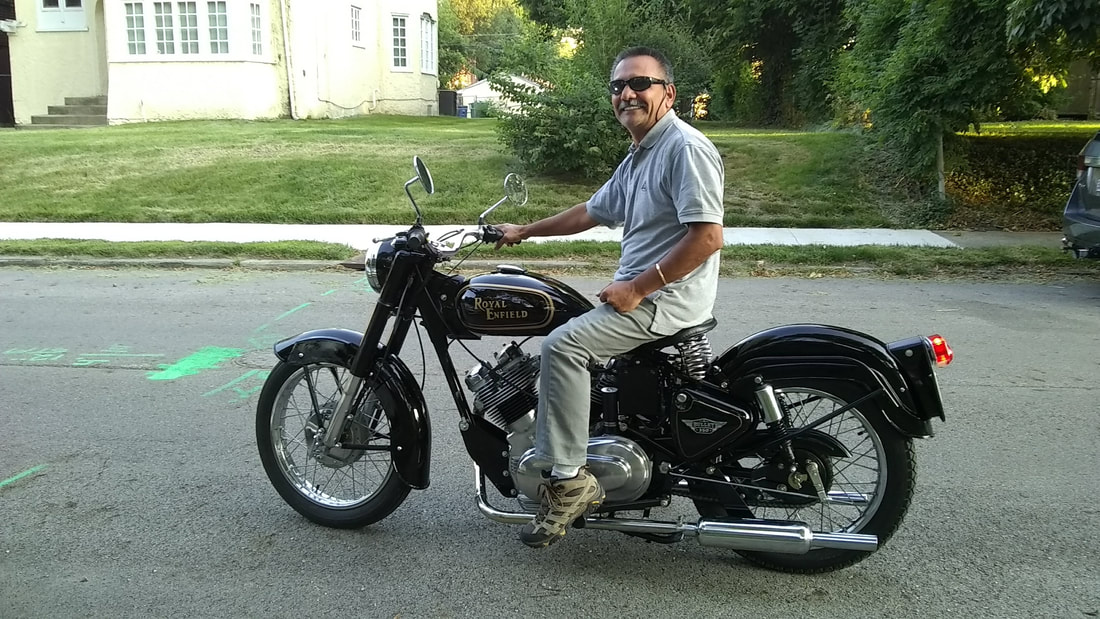
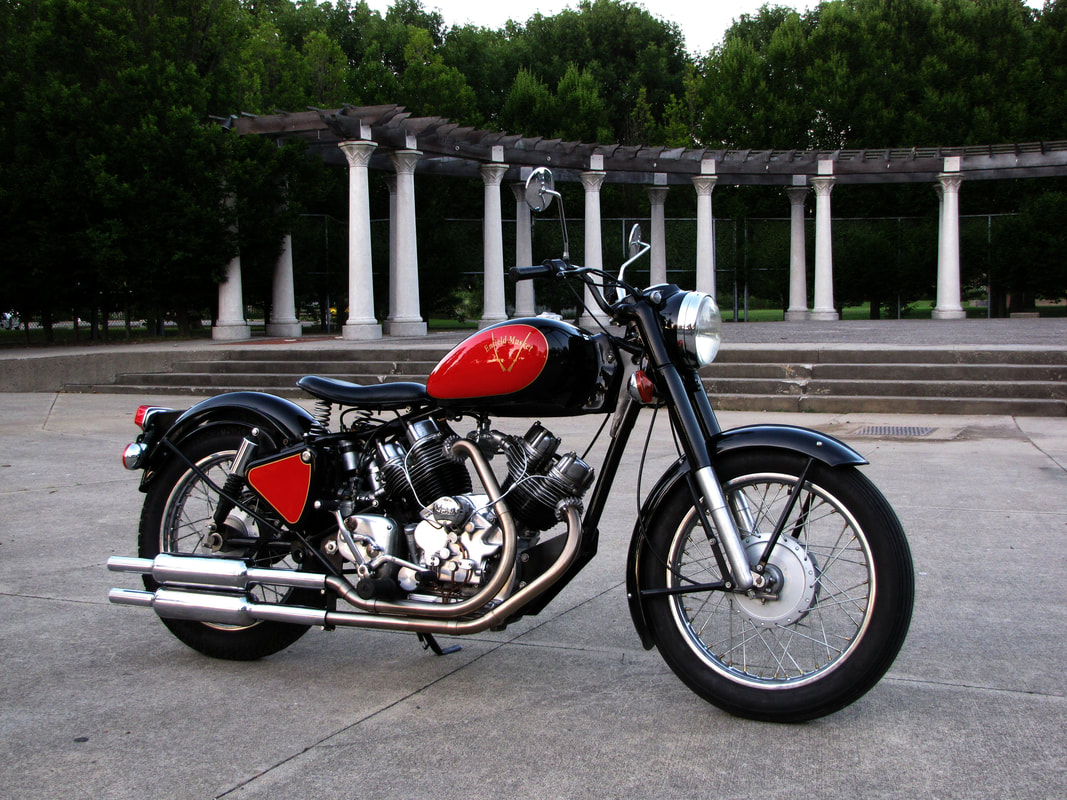
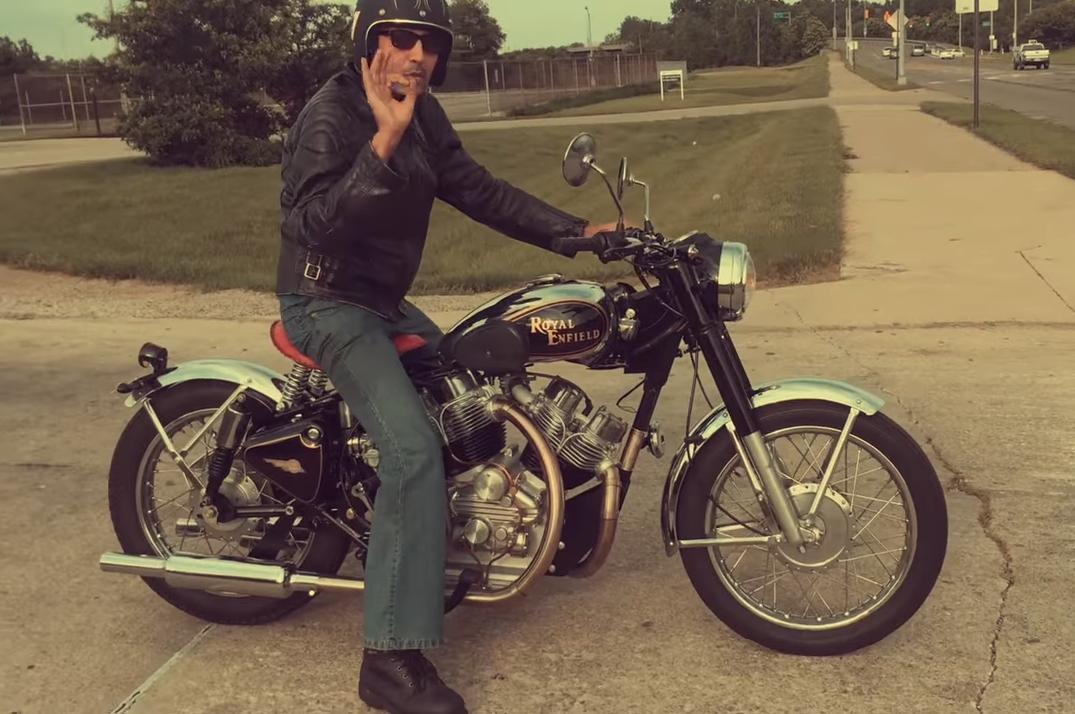
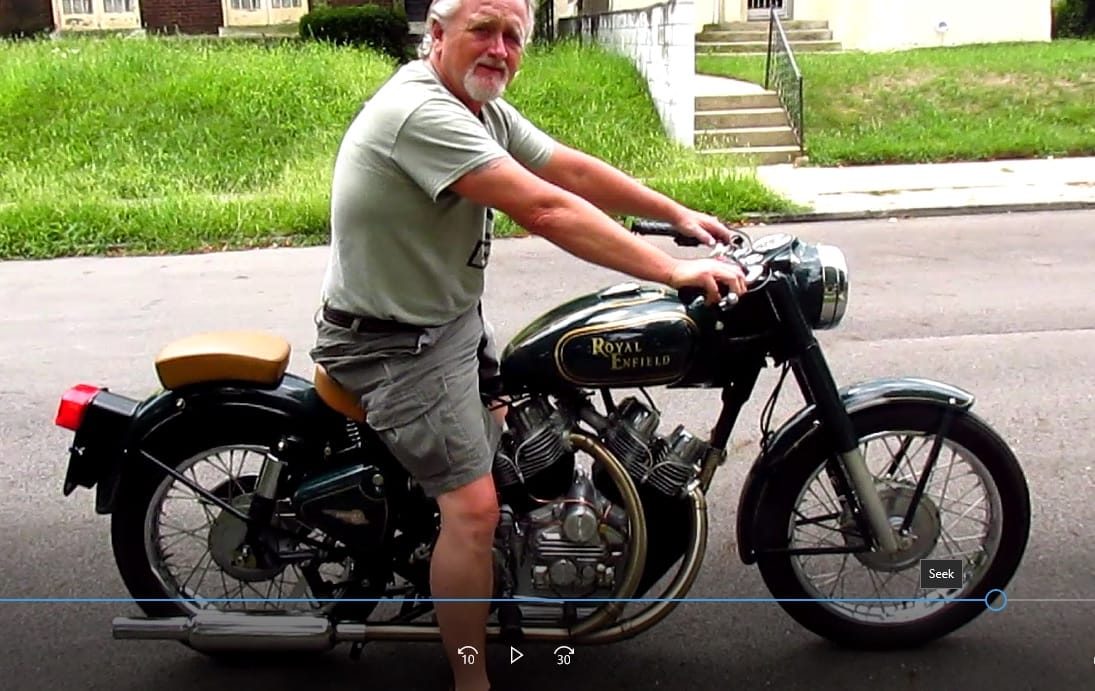
Took the ol' girl to picturesque Franklin Park near downtown Columbus last week to shoot some photos for a possible magazine article. The main reason you're seeing my unshaven mug is that I'm sporting a rather nifty T-shirt. Observe the highly detailed illustration of an Enfield Bullet, complete with silver embroidery on the bike's crash guard, evoking chromed steel tubes. Just wonderful.
And where did I aquire it? A gift from my first ever boss in India, who now runs one of the biggest design firms there. Thanks Amit!
Will be putting plenty of miles on it.
 
 
Time for another update.
I get a few mails almost everyday from interested folk, asking about pricing and when will it be available.
I know, I know, I wish the darned lump was done already too!
So what's taking so long?
Simple. The desire to get everything as ideal as possible because now, it will be in the hands of someone else, who will pay hard earned money for it and I know all about hard earned.
I want to make sure that whoever chooses to get one will be very pleased. Pleased with its simplicity, ease of maintenance, aesthetics and reliability.
Secondly, the effort is to make it as affordable as possible too.
As I sit and stare very hard at my computer screen, every single change I make has to be considered from all these different perspectives and sometimes they conflict.
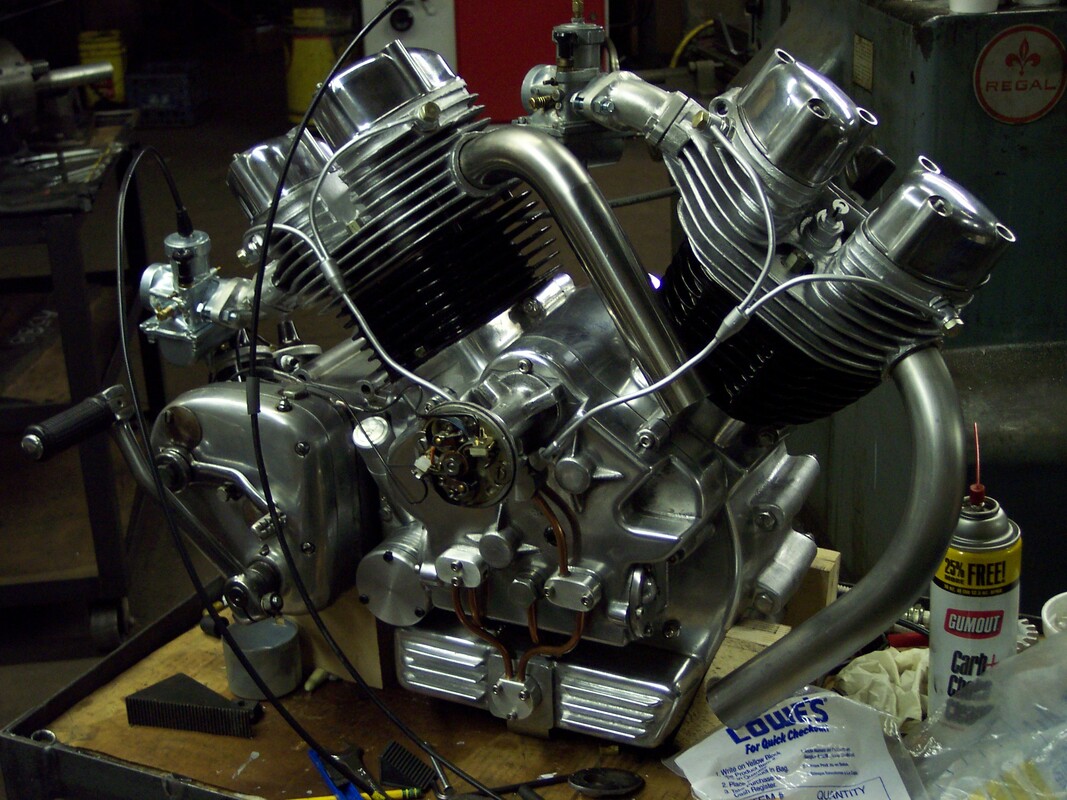
For example, it would be desirable to simplify the oil plumbing. The 1st engine has a FRAM (popular US brand) motorcycle filter which is mounted externally, needing oil lines to and from it. I was very keen that this detail be improved. Firstly, I wanted to use the new UCE engine's oil filter as it is much better than the older 'fabric' type and furthermore, it is an Enfield filter, available wherever Bullets are found.
Of the various options I came up with, all involve adding steps and extra fixtures in the machining process thereby increasing maching cost and one option also requires the addition of a core in the timing cover casting.
After a LOT of minute nudging of this and that just a tiny bit, I'm glad that I now have a solution through which the filter can be incorporated into a cavity in the timing cover, without adding a core to the casting molds.
This also implied much glaring at the remaining oil lines (from the sump to the pumps), their routing, attachment method and issues with easy removal.
So, it progresses, steadily, all leading to a better design.
The moment a hole has to be drilled at an angle not aligned with one of the x/y/z axes, it implies that a whole new fixture, 'teardown and setup' step has to be added to the machining process.
Yup, its a juggling game, each ball has to be in the air, not bump into the next one, not cost too much and not break if it hits the ground and look pretty. Ofcourse, we pray that the balls never hit the ground.

I've also started taking Friday's off from work  to have additional time to devote to this.
I hope it will be worth it.

Thanks for the encouragement everyone, it is truly appreciated.


Hullo there!

For those of you wondering about the redesign, here's an update. I have indeed been working hard on the project and wish things could go quicker but I need to keep the day job which certainly takes up a good bit of the day. 
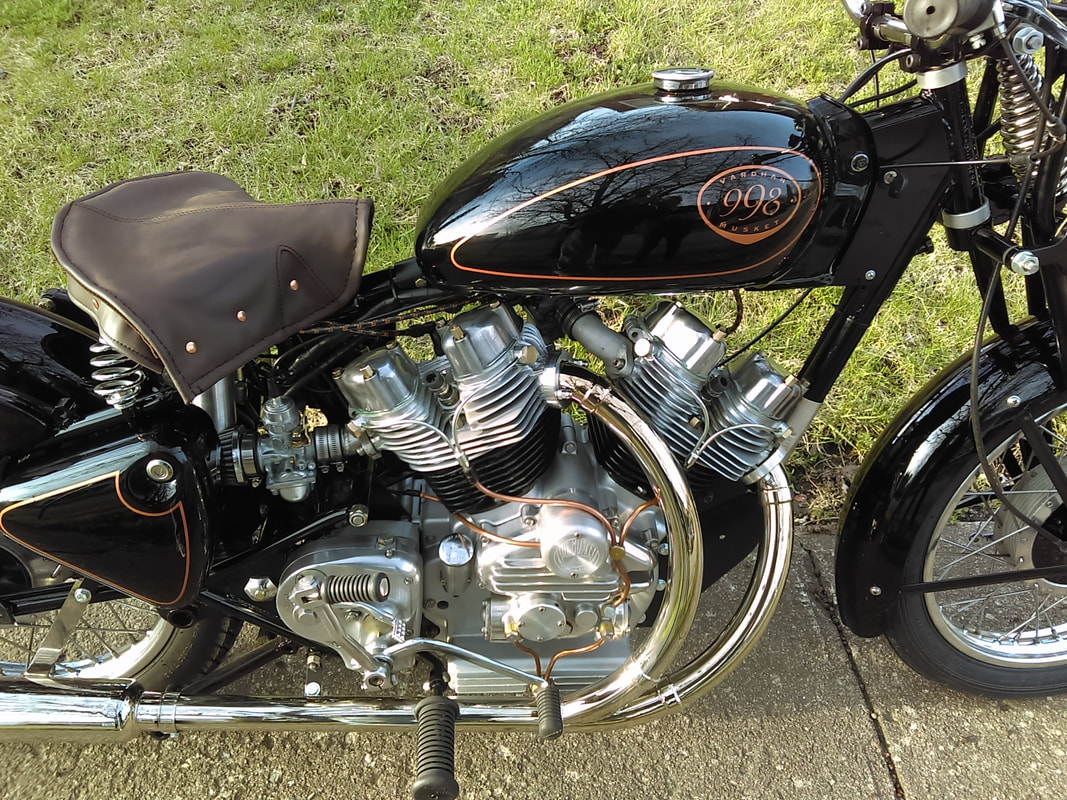
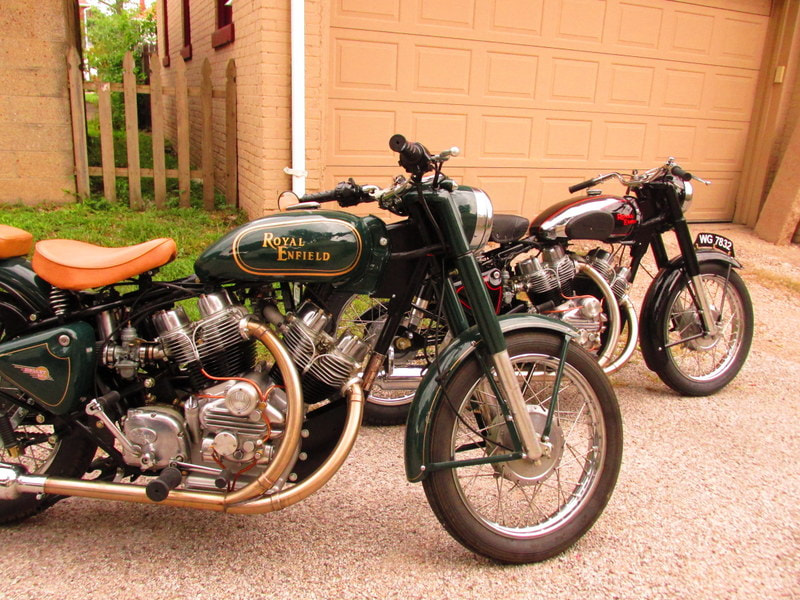
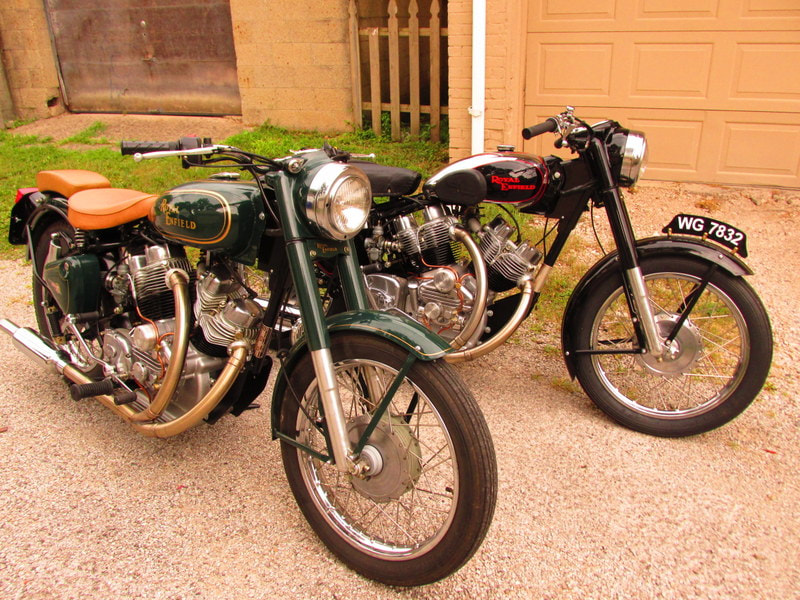
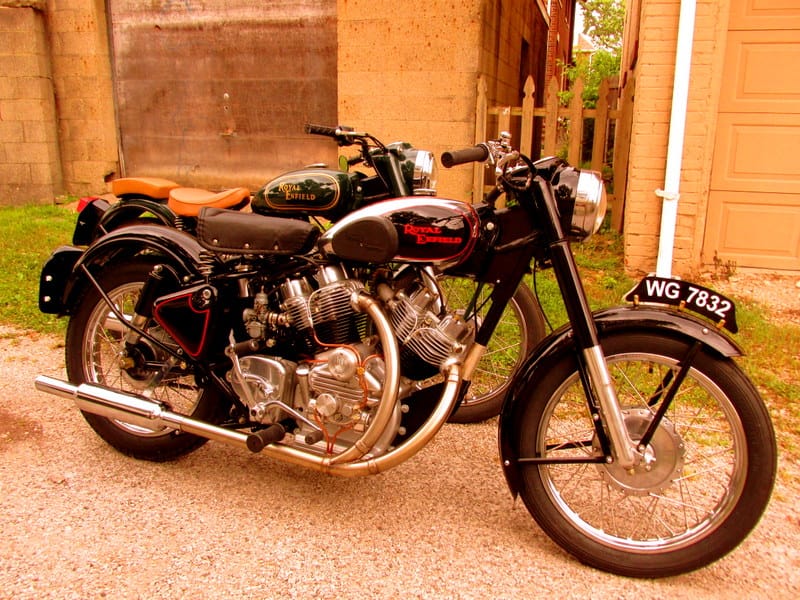
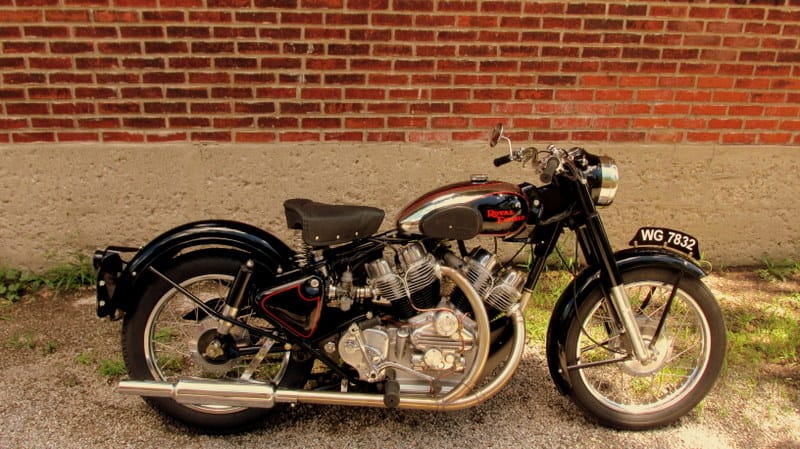
First thing I did was to build an accurately dimensioned wood mockup which could be bolted to the gearbox studs  in the correct position. This would allow me to mount 350 or 500 top ends to it and get  feedback on the ideal V angle. This V angle should be the best compromise in terms of smoothness, easy fitment into the frame, allow easy removal of top ends with motor in frame and allow all this with either 350 or 500 top ends. I also got familiar with the 500 cases and top end.  Some interesting things I've discovered from the 500 and progress so far:

1. Had never really been sure about this but having made measurements myself, I can say with certainty that the 500cc crankcase castings seem to be identical to the 350 except for the machining of a  larger diameter cylinder mouth and slightly different stud locations. This fits in nicely with my own intention which was to design the new castings such that either 350 or 500 top ends can be fitted, depending on preference.
2. This one was the biggest surprise. Discovered that the 500 head, which looks rather massive  is actually MORE compact than the 350 in the area of the intake manifold! Yes sir, the 350's intake 'protrusion' is actually longer and sticks out further than the 500. Thing is, the rear cylinder head intake in the V twin must not foul with the rear frame tube (which goes downwards, roughly under the seat and ends up at a "T" junction, bolted to the rear engine mounts. With several iterations of V angle changes, I found one which should work well in this regard.
On a side note, the 500 head seems really beautiful to me...that stack of fins which splay straight, tangentially on either side of the exhaust port, while the fins above continue on their inward curve, following the geometry of the rocker covers- pure aircooled art!
3. The next good thing which also seems well within reach is retaining the stock rear engine mounts. The first Musket engine needed modification of these mounts to allow the entire crankcase to shift slightly forward and up. As those of you who have removed your cases from the frame know, the engine is a stressed member, with the frame bolted to the front and back. The back is somewhat "interesting"...for those of you who haven't taken it all apart, here's how it goes;
      a. The crankcase is bolted to the gearbox with 4 studs.
      b. The front engine mounting plates are bolted to the front of the crankcase and the frame's front (down) tube.
      c.  The REAR mounting plates are in 2 separate pairs- an upper and a lower. The upper pair of triangular plates are bolted to the top of the gearbox and the lower pair of plates (which also serve as mounts for the center stand) bolt to both the bottom of the gearbox and the rear end of the crankase.
The new engine should be much easier to install as all the rear engine mounts can stay "in situ". Here's how it should go if your stock Bullet is standing on its center stand, eagerly awaiting its heart transplant:
       a. Remove tank and clutch cable from the clutch lever at the handlebar.
       b. Remove front engine mounts.
       c. Cut main wiring harness somewhere halfway across  'backbone tube'- this is the frame tube under the tank.
       d. Cut the backbone tube  right in the middle.
       e.  The entire front section of the bike can be rolled away as a unit- handles, forks, wheel and all.
        f.  Remove clutch case components- primary chain, sprockets, inner and outer covers etc.
        g. Unbolt the 4 studs connecting cases to gearbox and remove stock crankcase. Gearbox stays in frame.
        h. Install v twin crankcase by bolting to gearbox with same 4 studs.
        i.  Install custom FRONT engine mounting plates to front of cases.
        j.  Install frame 'backbone tube' extension piece to where frame was cut.
       k.  The front section of the bike that was rolled away can now be attached to the rest of the bike through the front engine mounts and the frame extension piece.

The frame extension piece can be welded permanently which is preferable, but it is also possible for it to be attached rigidly with cross bolts.
Ofcourse, there will still be other  things to take care of  but the bulk of the installation should be done.
 
 
Picture
My dear friends,
Whew, that was quite a hallucinatory trip. Driving through PA, late night, barely able to see 6 feet ahead, with  George Carlin to keep us awake...enough to bend anyone's mind! But we made it safely.
A huge thank you to my great friend Amar who drove the whole way in his Matrix. Its incredible how much you can fit in the back of one!
And a huge thank you to Larry in NJ who was so generous and helpful to let me have the 500 for my project. A great new friend in NJ!
Think I finally have everything I need for completing the design.
 
 
Picture
Hi there!
Much excitement and sleepless nights. The weather is finally co-operating and the plan is to head to NJ tomorrow afternoon after work. Should be there late Saturday morning. The 500 will be completely dismantled to fit into the car.
The redesign is at the point where I can't progress further without having the 500 available to check and recheck all fitment issues for the bigger top ends.
Will keep you guys updated.
Thanks!
 
 
Good news guys!
Seems like the hunt for a bike to pop the new motor into may be over. Its a 500ES, poor thing had some front end damage so is currently out of action.
Larry in NJ was originally going to turn it into a cafe racer but when he came across my project, he very generously decided to pass it on to me. Thanks very much Larry!
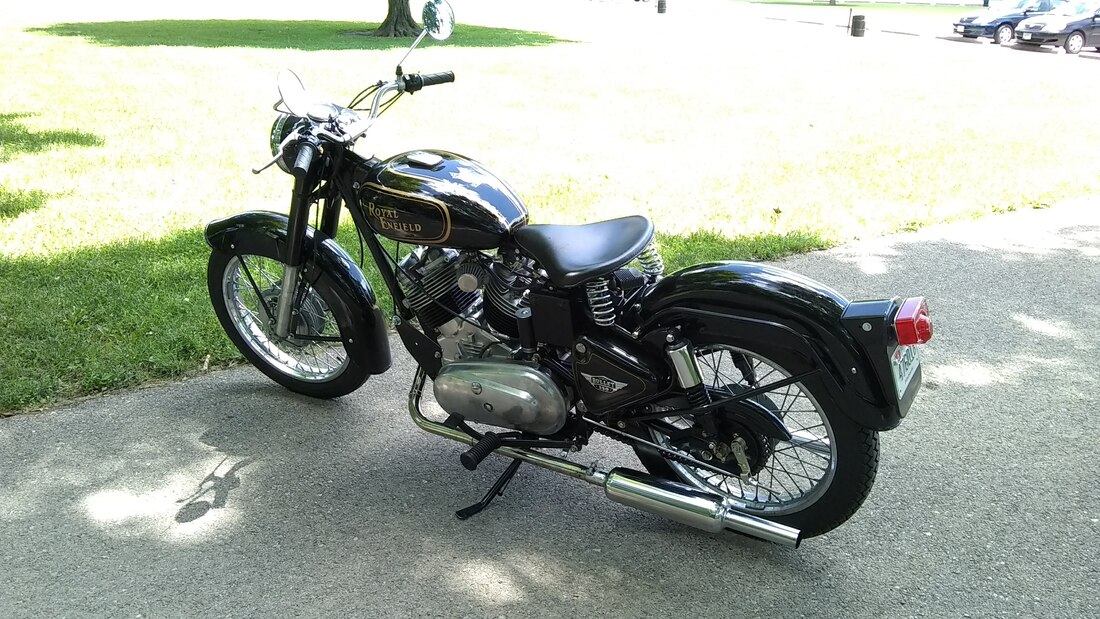
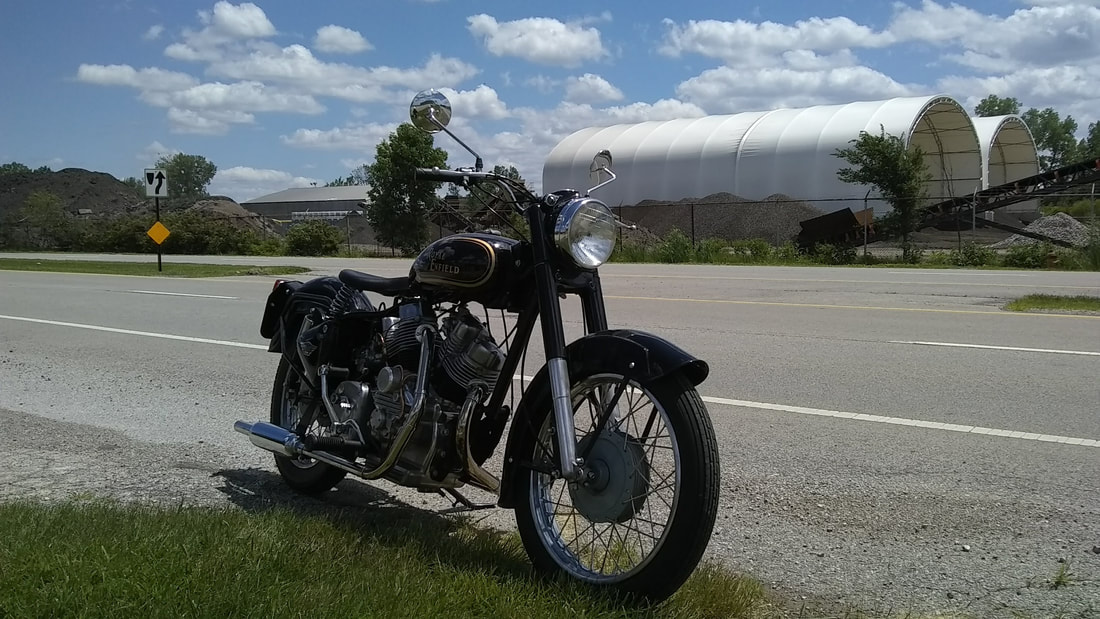
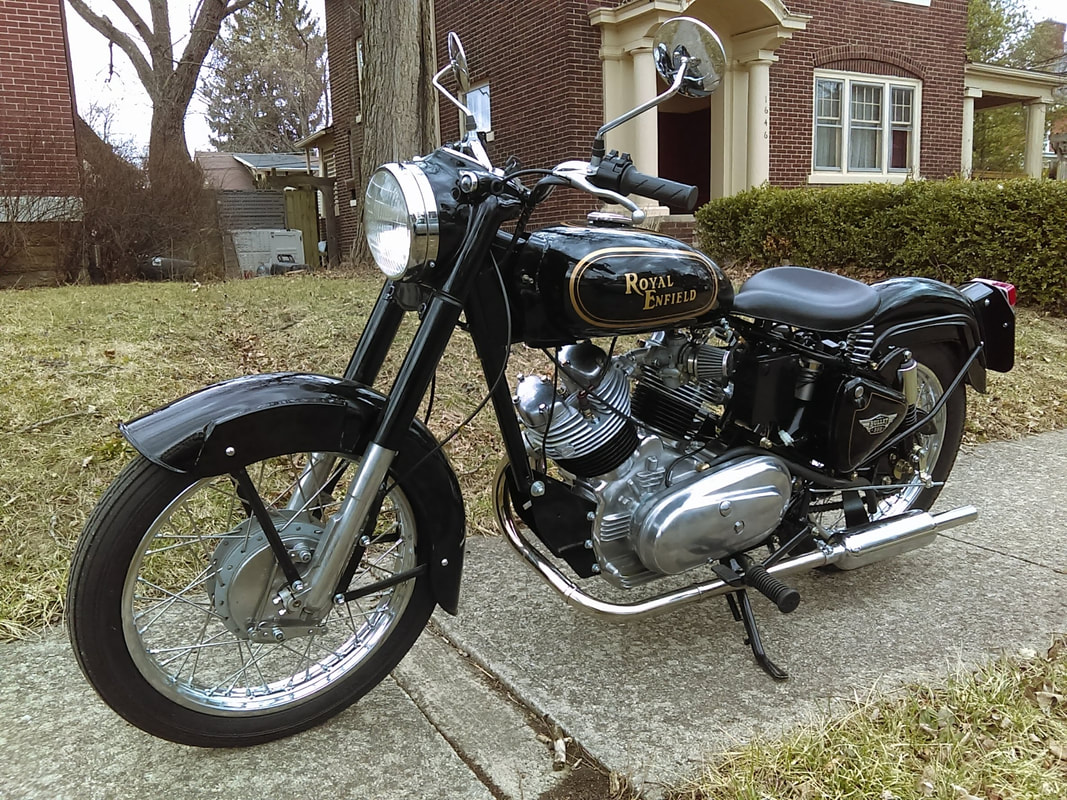
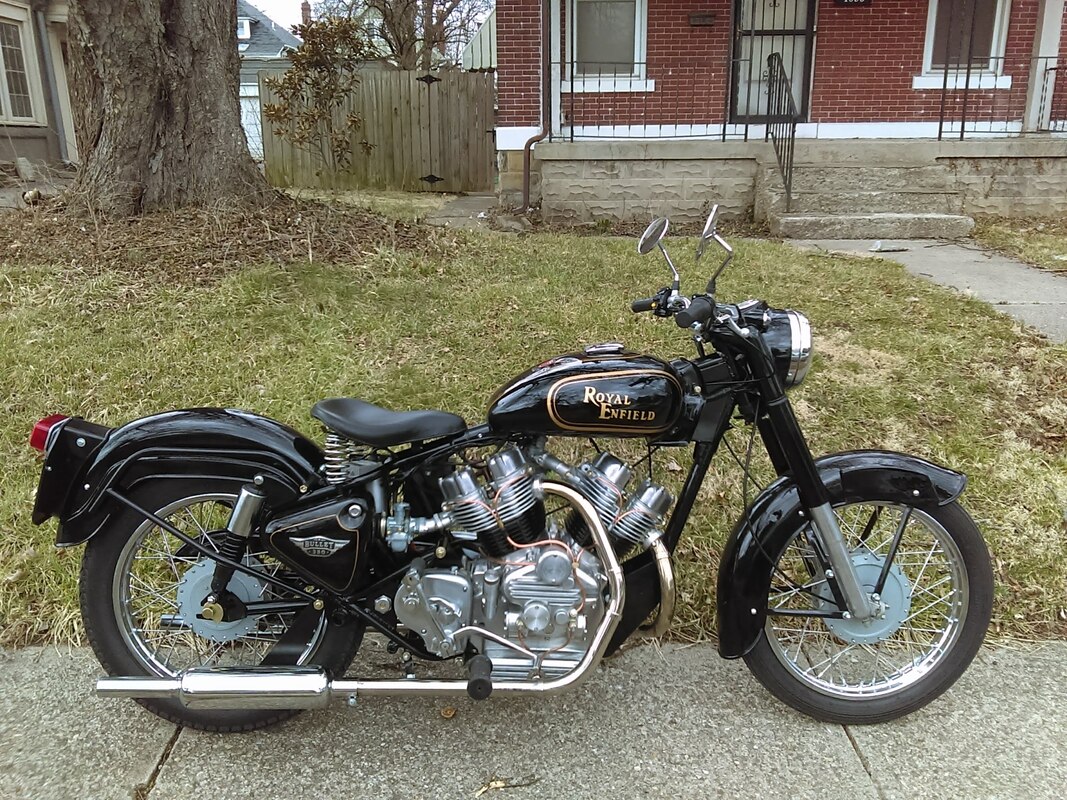
So...she's going to get fixed up and undergo a double heart transplant. She'll wake up suddenly one day, very surprised, thinking "I swear I had only one of those..."


Seriously guys, I NEED another Bullet.
I haven't yet aquired the heart to rip apart the first one, she's running beautifully and starting it up is the best therapy for this callously cold grey winter.
So, how do I figure out the frame and fitment issues for the bigger 1000cc motor? NEED another Bullet.
Or ATLEAST, need a couple of 500 top ends. OK, rockbottom, need ONE 500 top end.
So, if any of you good folk know of a  Bullet  for sale for a song (I'm not exactly loaded right now, post house buying), please let me know. Its condition is immaterial as long as it hasn't been wrecked and has not bent its frame. Don't care if it hasn't run in years. I'm in Columbus Ohio, so it would be great if its not very far from here, but let me know anyway.
Drop me a line through the contact page.
Thanks!
 
 
Picture
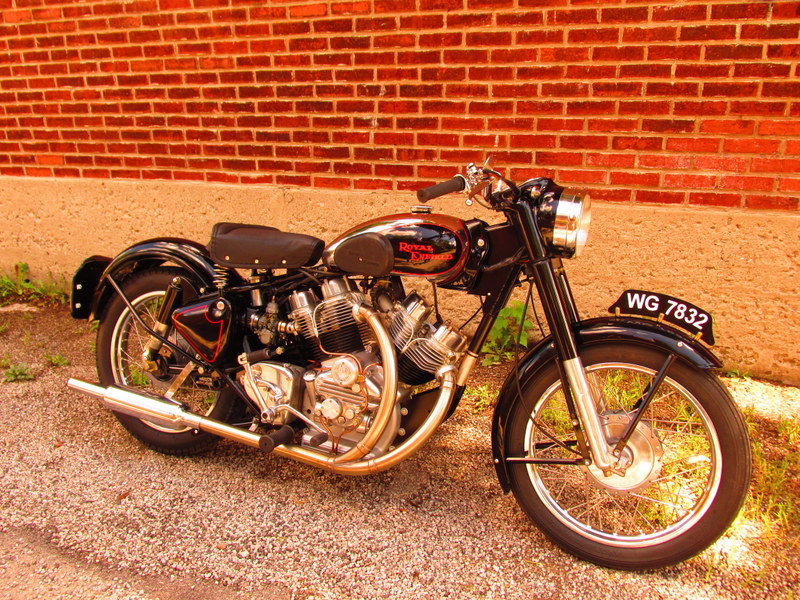
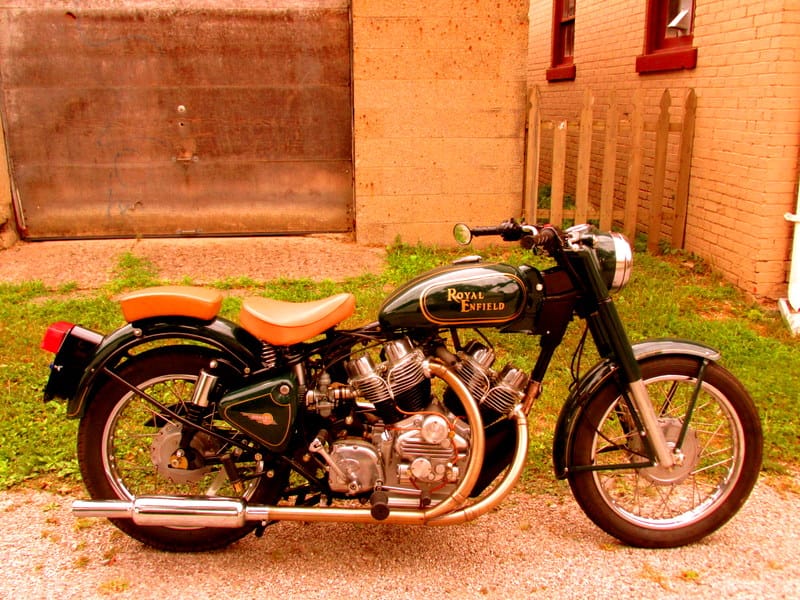
 Greetings from cold Columbus!

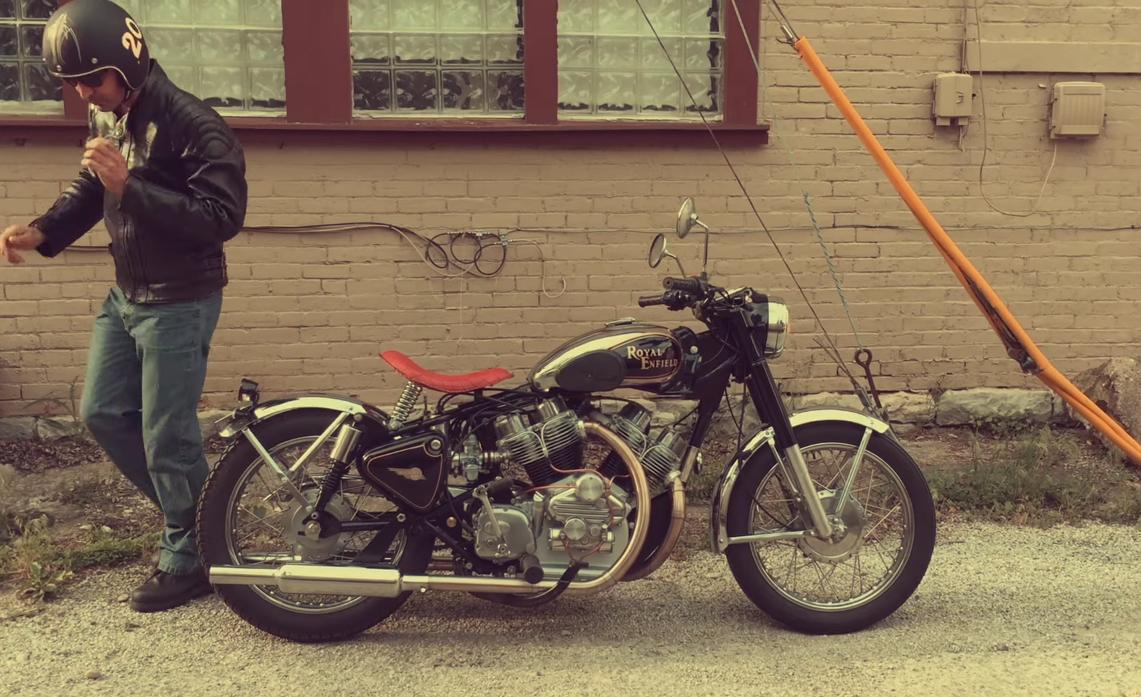
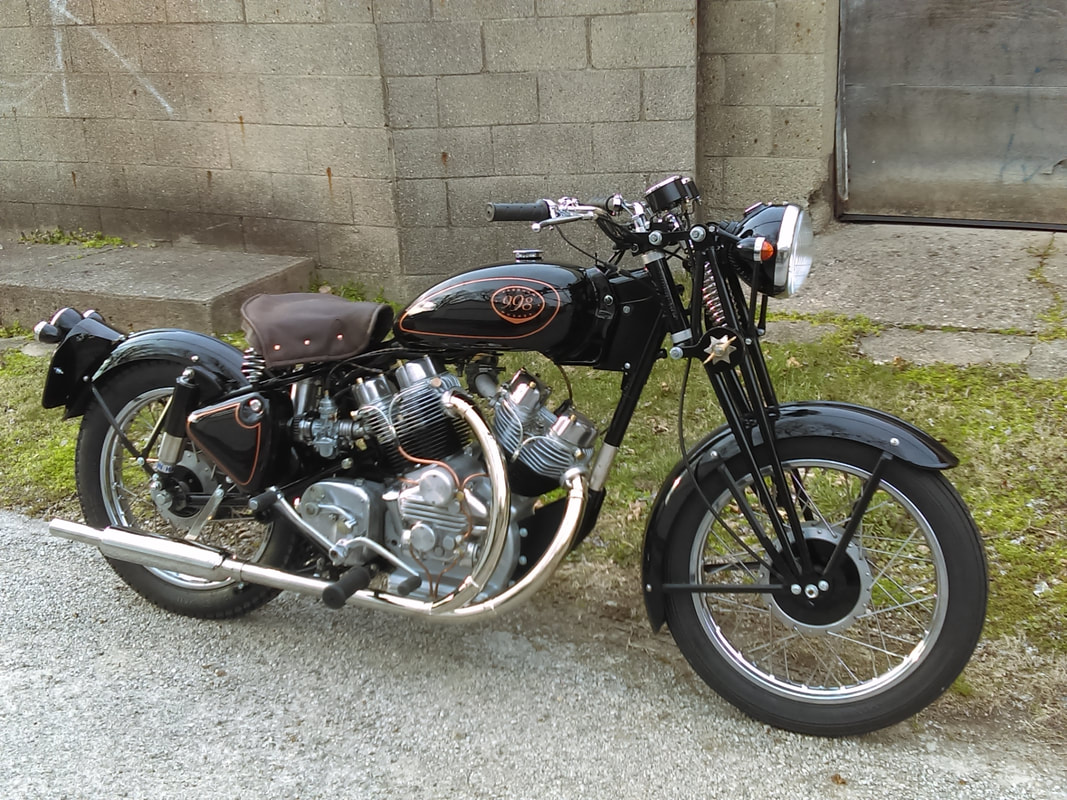
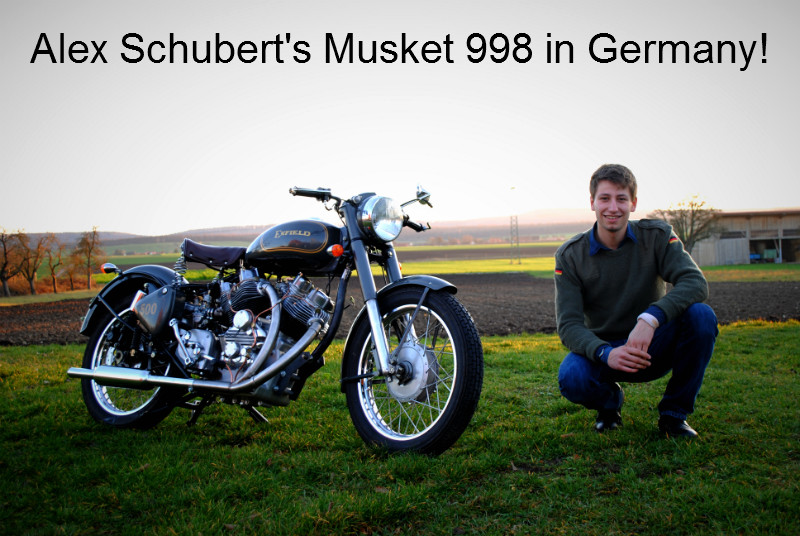
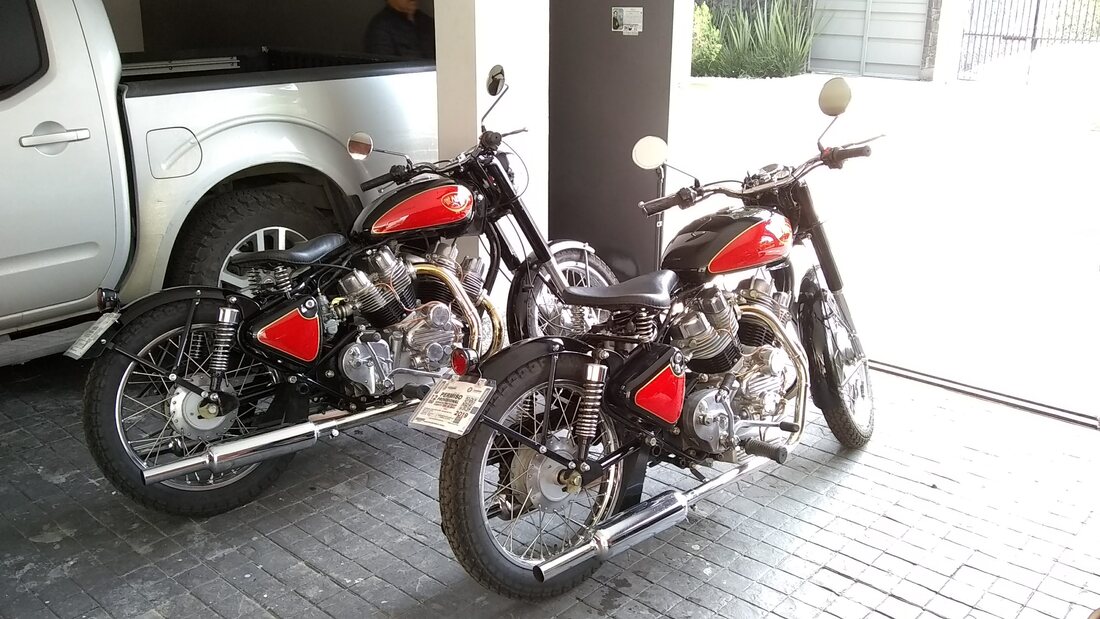
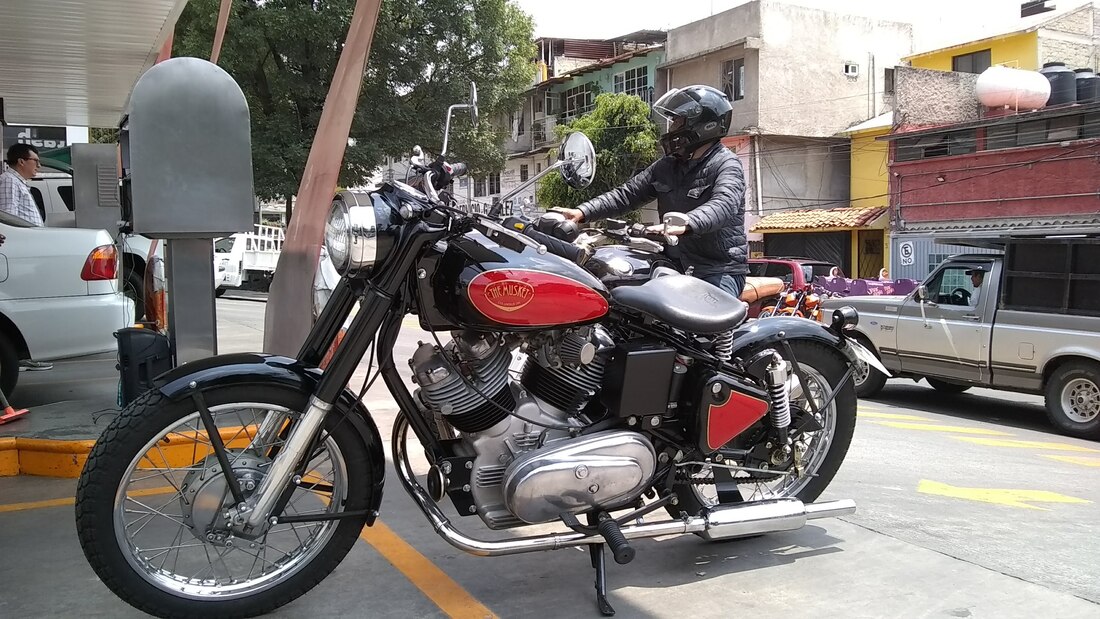
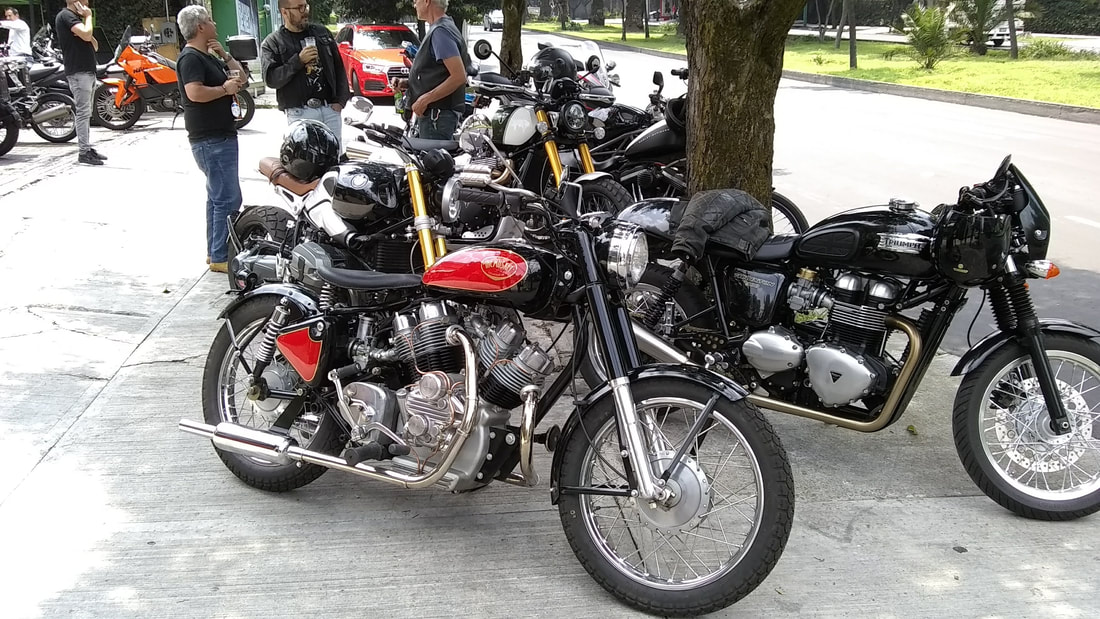
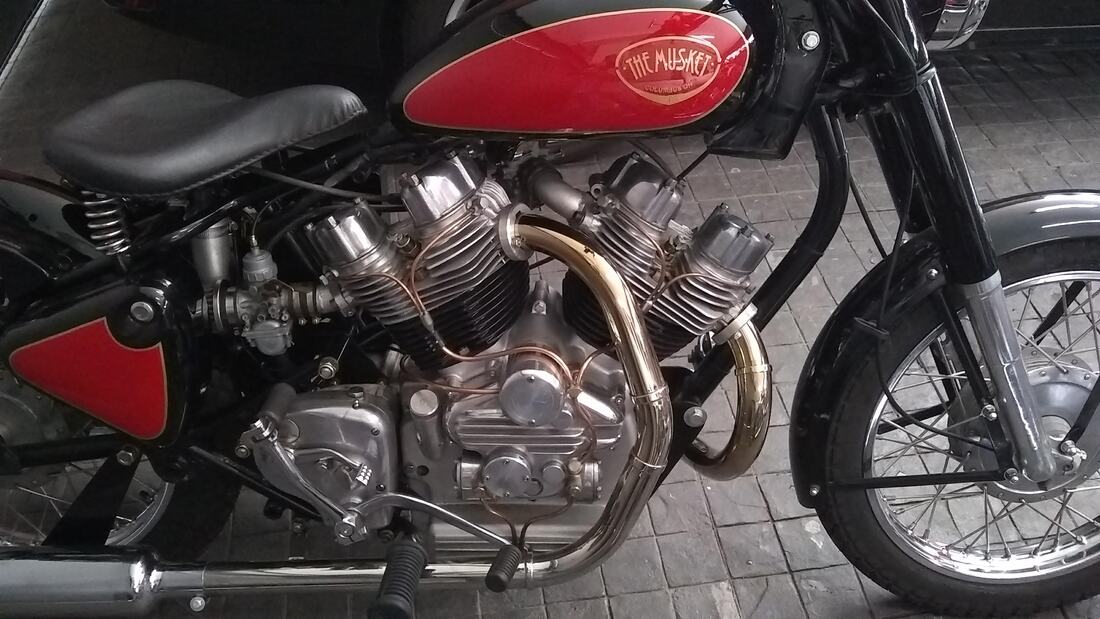
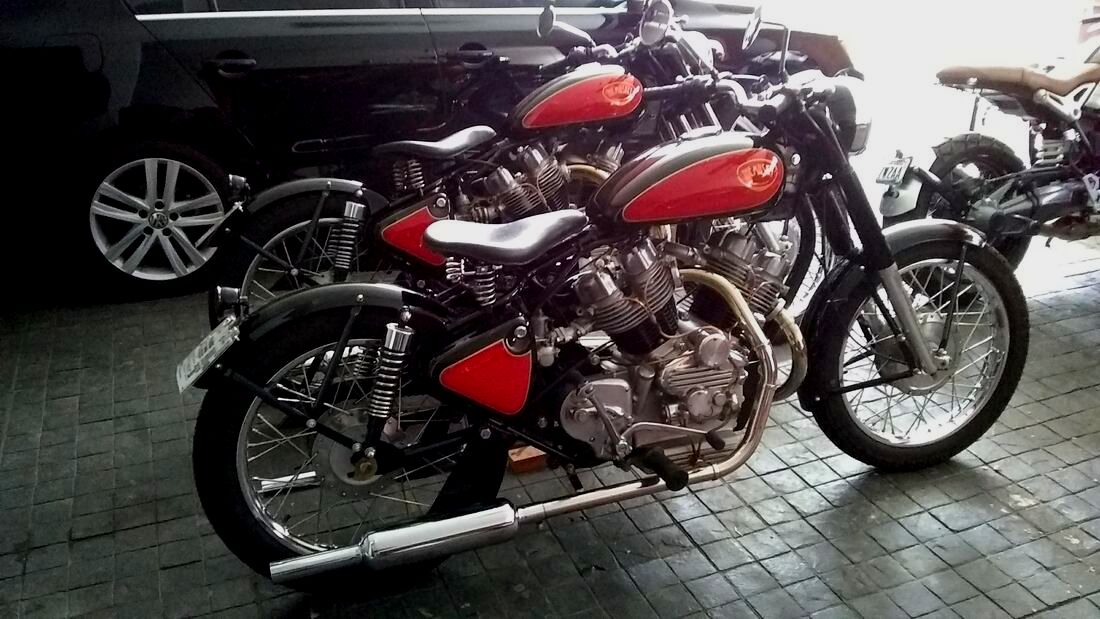
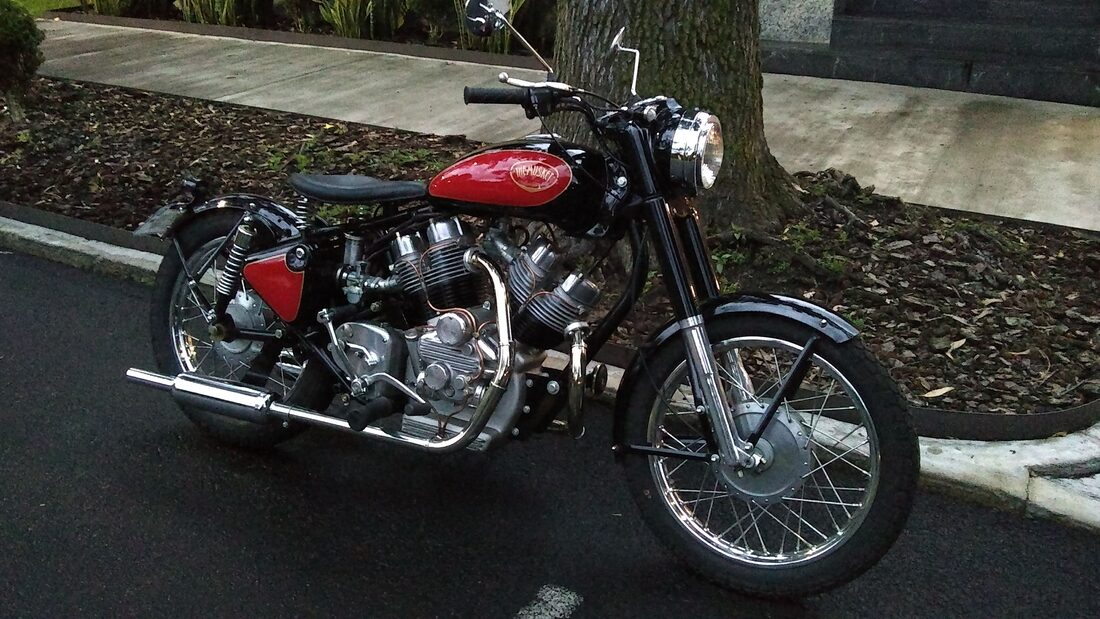
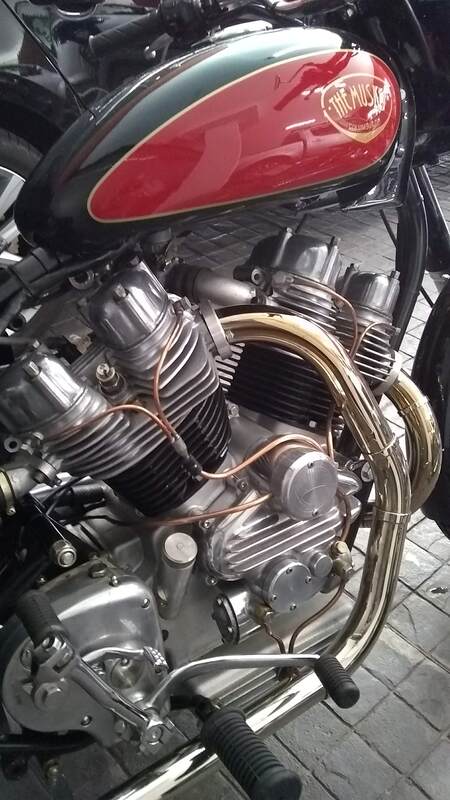
If you like the Enfield Musket, then this is the online place where you can know of the latest developments, interact with others who share your interest and offer your input.
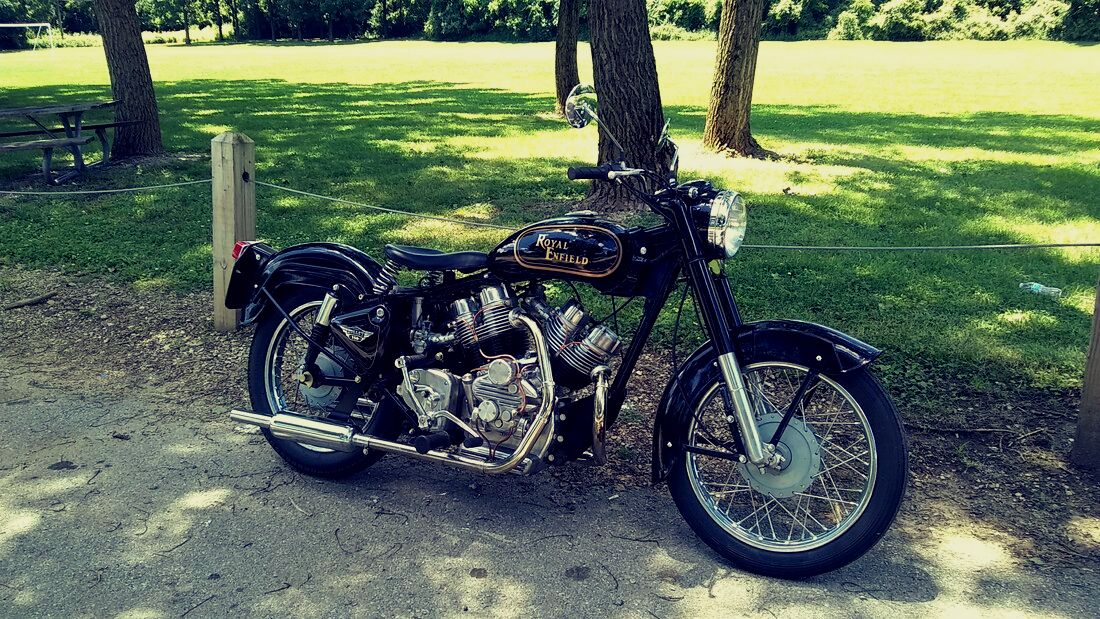
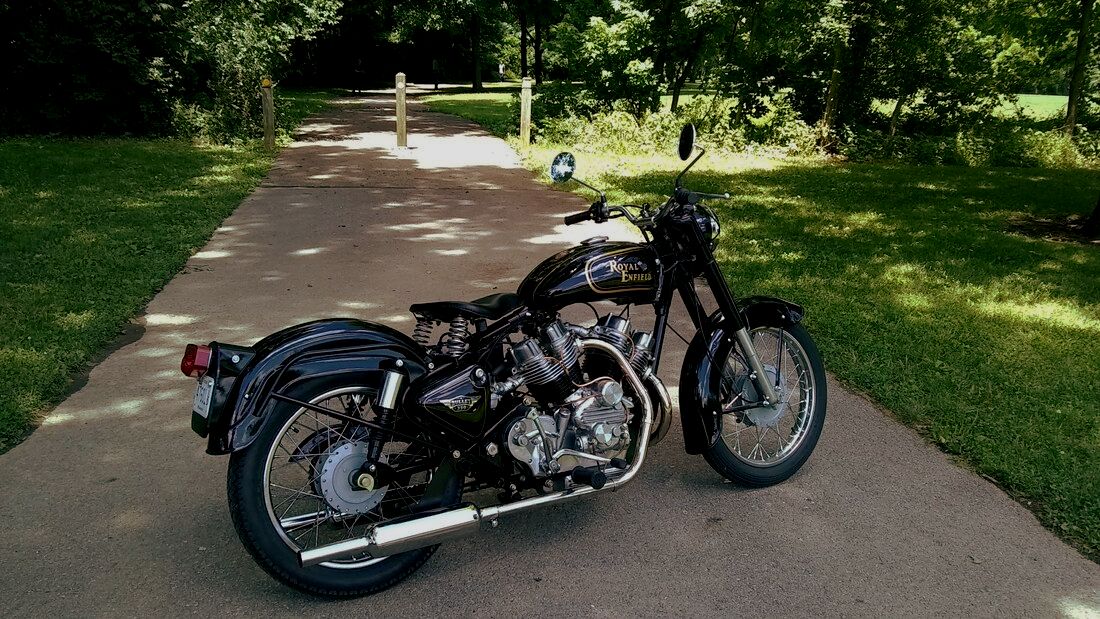
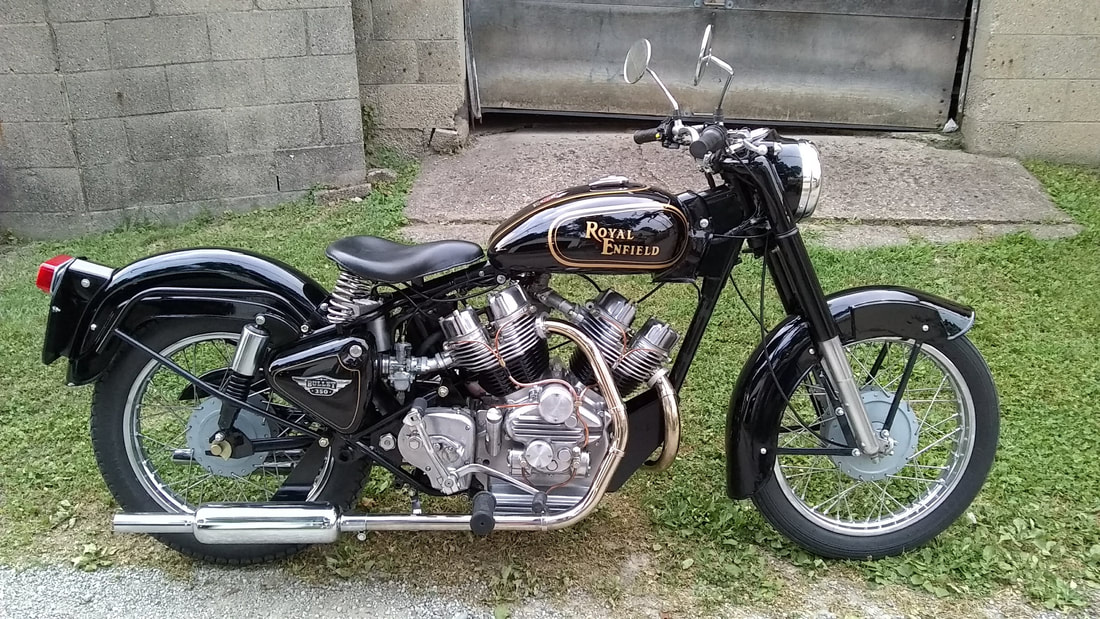
Here's the latest- I'm already making some design changes in CAD, which will result in updated patterns in a few
weeks. This is being done to primarily allow the 500 top ends for a 1000cc twin. I had a huge no. of mails urging that I make that option available, particularly for  USA riders, as parts, performance upgrades, tuning,
etc. are all geared to the 500 here, almost no 350s to be seen. But a good number of people were happy that I chose the 350 as with its lighter piston, it is generally less stressed and  smoother but slower. Not too worried about that as there are tuning gurus who can extract significantly more go from the 350.
The changes I'm making should allow either a 700 or 1000, you choose and the cylinder stud holes will be located and threaded accordingly.
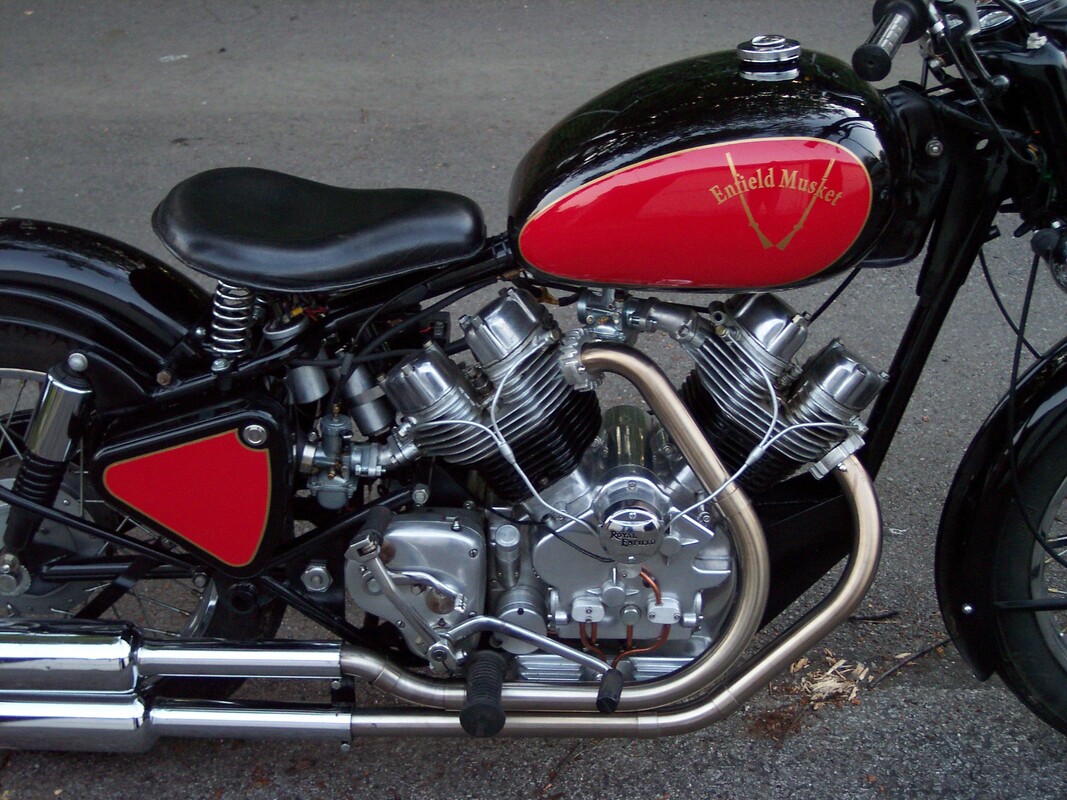
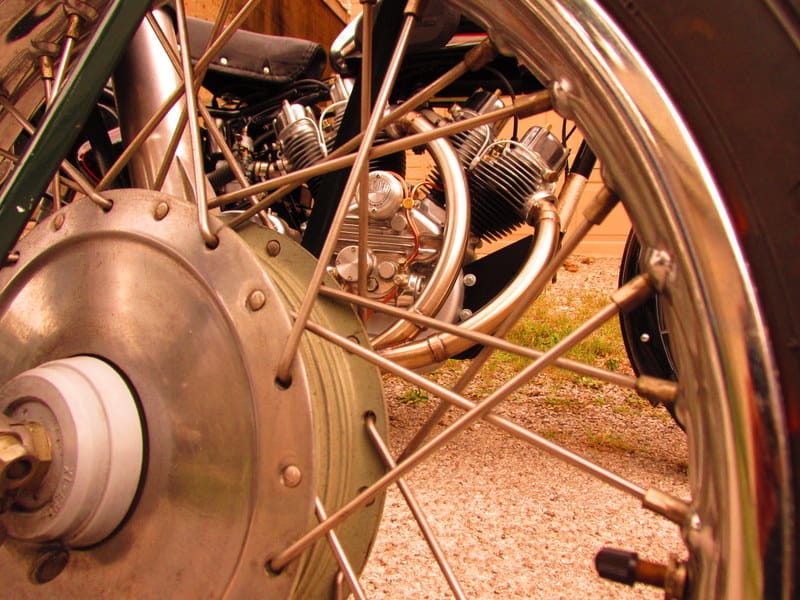
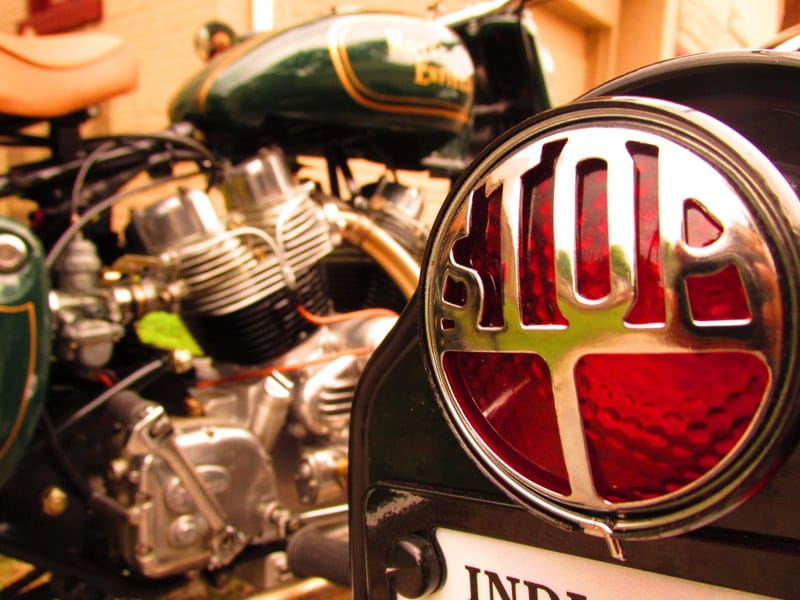
The plan is to offer the thing as a  kit, built "stock and mild" or "pretty quick " - as you like it. You can do the work yourself or have a buddy/shop do it for you. I'm planning to provide ONLY the stuff you need, to keep it as affordable as possible, which would minimally be the complete, machined cases with the crank (or without it if you like), cam spindles, bearings and oil pump. Custom engine mounting plates, frame mod parts. Would like to offer a twin down tube conversion down the road too. You add the top ends, carbs, transmission, upgraded clutch, which you can source from a combination of your own Bullet, Classic Motorworks, Hitchcocks, Ebay or anywhere else.
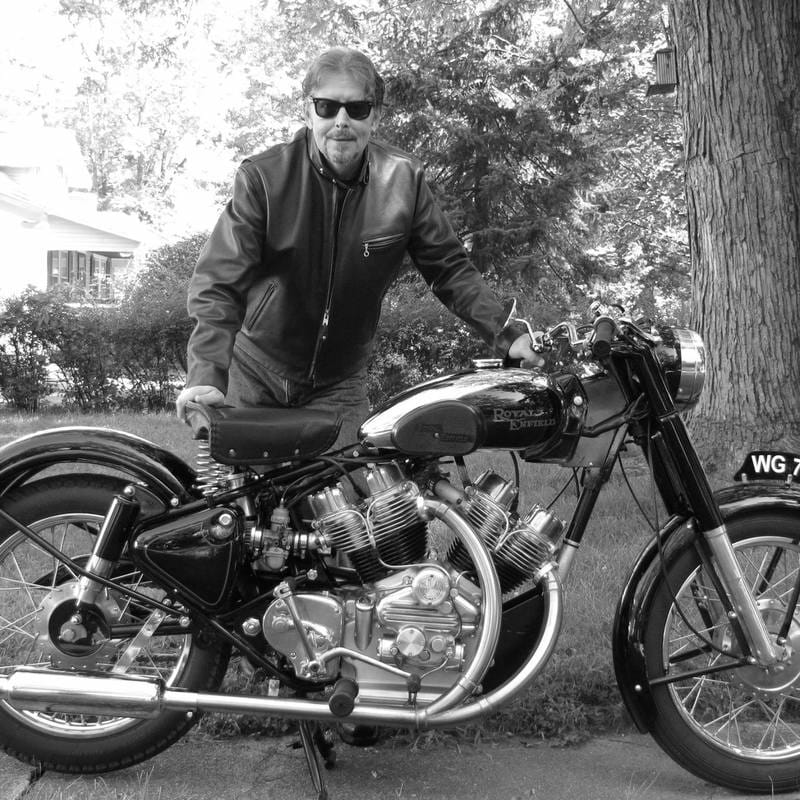
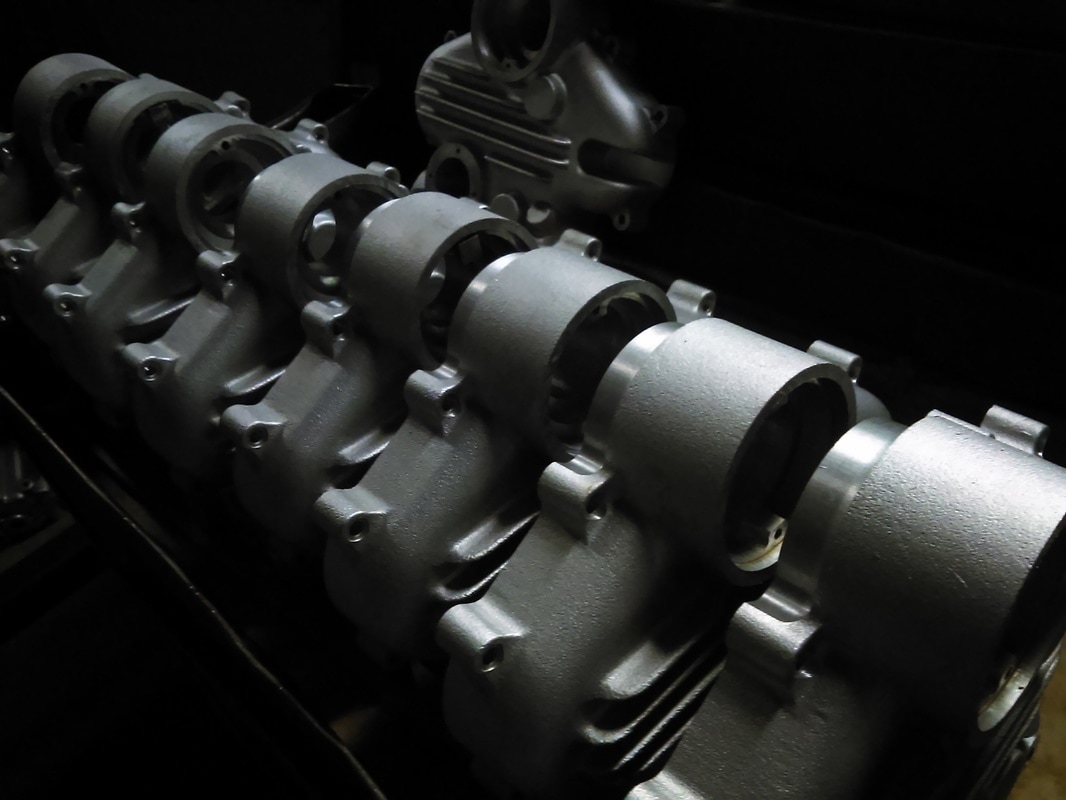
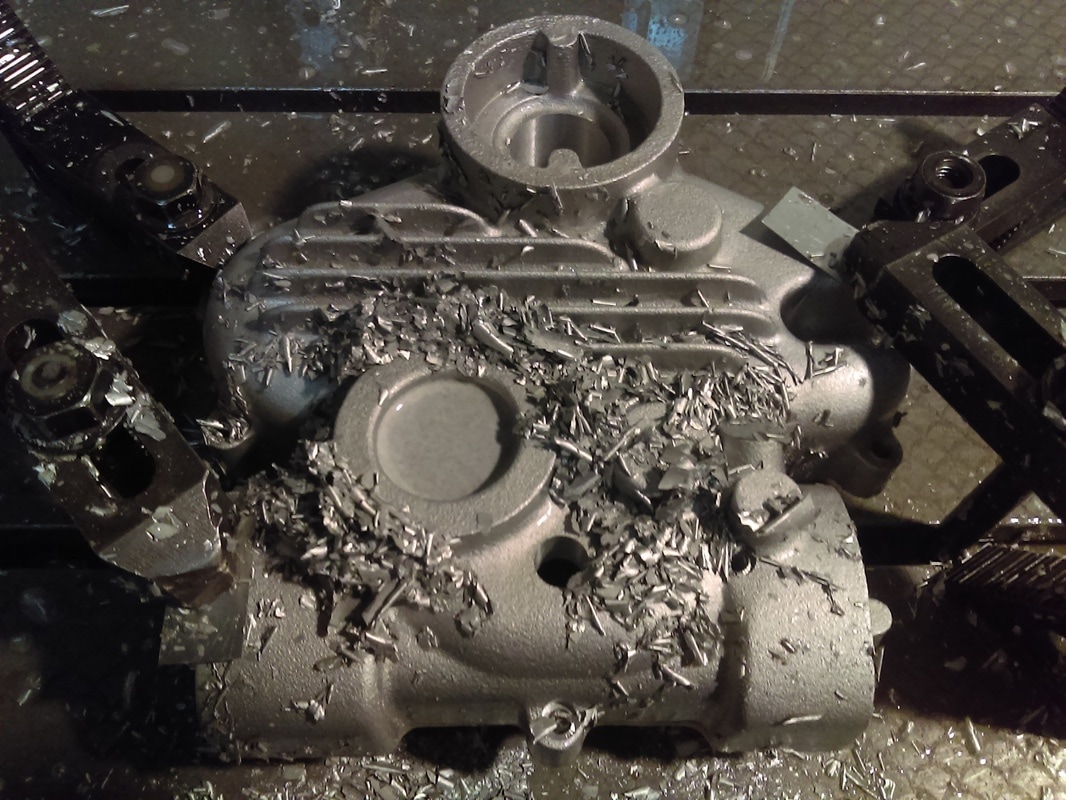
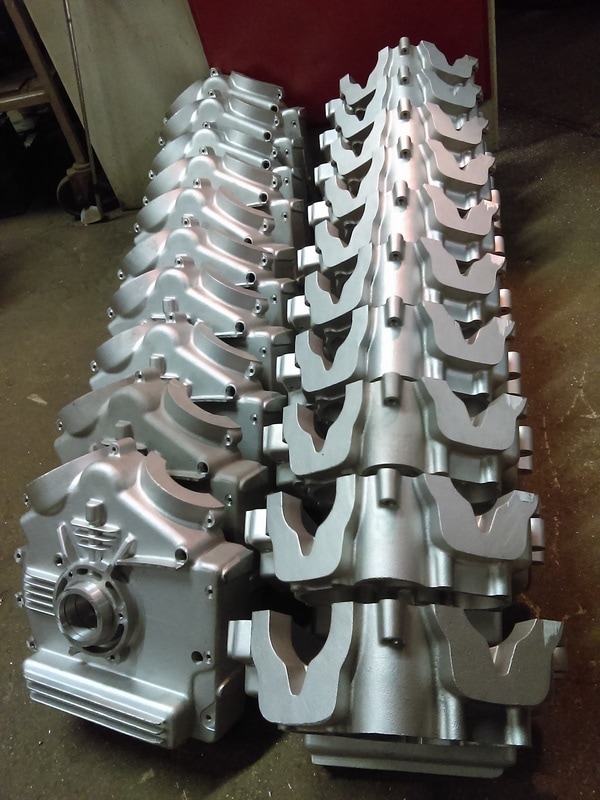
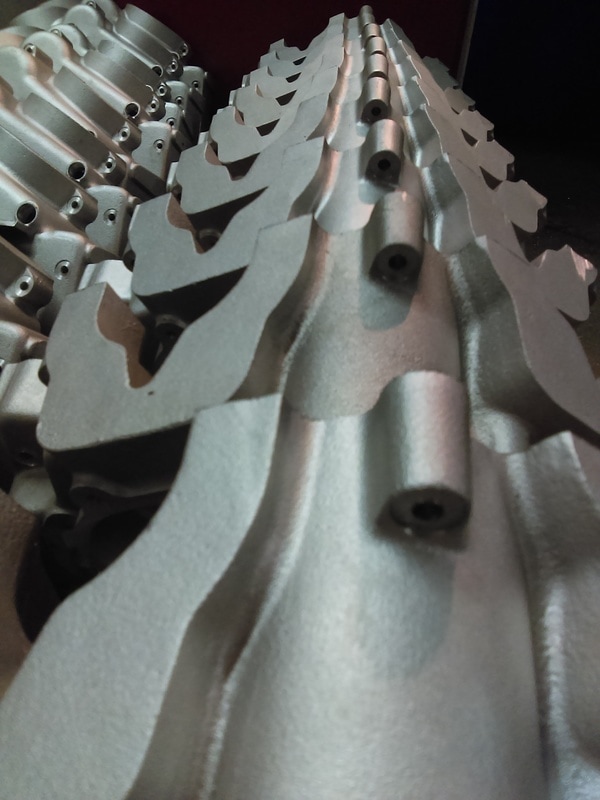
The next step, already underway, is to update the patterns with the design changes, make a new batch of castings (a few sets) and work out an efficient machining process for CNC. At this point, I will be able to calculate costs and take orders from the brave few who will fearlessly (or nervously) throw  caution to the wind and part with moolah for 3 lumps of aluminium which hold the promise of  audible motive force.
I hope there are atleast five of you out there!

Regards,
Aniket